Introduction: The Evolution of Live News Graphics
The way news is presented today has completely changed. It is no longer just about an anchor sitting in a studio reading headlines. Modern news is visual, fast, and data-driven. Viewers expect to see information instantly and more importantly, they expect to understand it instantly. This is where Live News Graphics play a critical role.
From scrolling tickers and breaking news animations to election dashboards and multi-window layouts, everything you see on a news screen is powered by a graphics system working in real time. These systems are known as Live News Graphics Engines.
Earlier, newsrooms relied heavily on traditional Character Generator (CG) systems. These were powerful, but they came with limitations especially in terms of flexibility and scalability. Today, with the rise of digital platforms and live streaming, the industry is shifting toward HTML5 and cloud-based graphics solutions.
However, this shift is not as simple as replacing one technology with another. Both CG and HTML5-based engines have their strengths and limitations. Understanding this difference is important for any broadcaster, producer, or content creator.
What Are Live News Graphics Engines?
At a basic level, Live News Graphics Engines are software systems that create, manage, and display graphics during live broadcasts. But their role goes much deeper than just showing visuals. They are responsible for:
Real-Time Rendering
Graphics must appear instantly while the broadcast is live. There is no room for delay, especially during breaking news or live events.
Data Visualization
Whether it’s election results, stock market updates, or live statistics, raw data needs to be converted into visuals that viewers can easily understand.
On-Air Presentation
Graphics must look consistent, professional, and synchronized with the broadcast feed.
Two Core Types of Live News Graphics Engines
In today’s workflows, these engines are broadly divided into two categories:
Traditional CG-Based Graphics Engines
These are built specifically for broadcast environments. They focus on performance, precision, and high-quality output.
HTML5-Based Graphics Engines
These are modern systems that use web technologies. They are more flexible and are often used for digital and cloud-based workflows.
Types of Live News Graphics Engines
Traditional CG-Based Graphics Engines
A Character Generator (CG) is one of the oldest and most reliable tools in broadcast graphics.
These systems are designed to handle high-pressure live environments where timing and accuracy are critical.
What Makes CG Systems Powerful?
CG engines are known for:
- Frame-accurate rendering: Graphics appear exactly in sync with video frames.
- High-end 3D capabilities: Complex animations and visually rich elements can be handled smoothly.
- Stability in live environments: They are built for continuous broadcasting without interruptions.
Where Are They Used?
- Television news studios
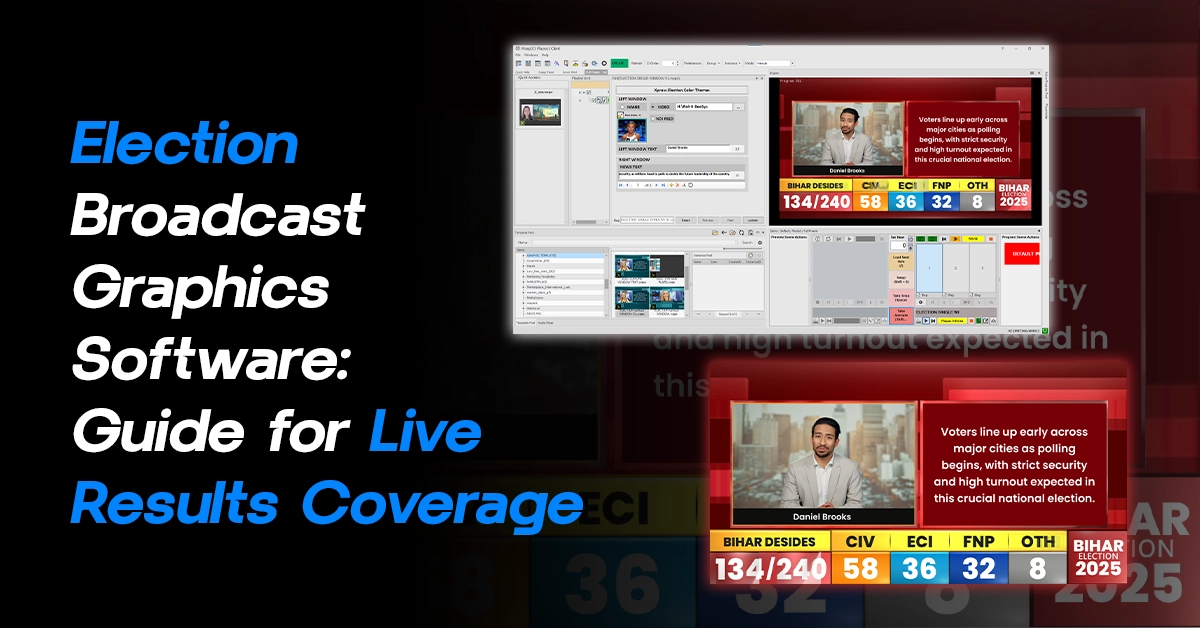
- Election result coverage
- High-end broadcast production
If the requirement is precision and reliability, CG systems are still a strong choice.
HTML5-Based Graphics Engines
HTML5 graphics engines are built using web technologies like HTML, CSS, and JavaScript. They run inside browsers and are often connected to cloud systems.
How They Work
- Graphics are rendered in a browser
- Data is fetched through APIs
- Content can be updated remotely
Why Are They Popular?
HTML5 engines are widely used because they offer:
- Remote accessibility: Teams can manage graphics from anywhere.
- Faster deployment: No heavy setup is required.
- Easy integrations: They connect easily with live data sources.
Where They Are Used
- OTT platforms
- YouTube Live streams
- Digital-first newsrooms
For smaller teams or web-based production, HTML5 graphics often provide a quick and flexible solution. Get free sports graphics software: Full guide on HTML vs WASP3D
CG vs HTML5: What Really Matters in Live News Graphics?
Instead of just comparing features, it’s important to understand how these systems behave in real production environments.
Performance and Reliability
CG engines are built specifically for broadcasting. They do not depend on browsers, which means they deliver consistent performance during long live shows.
HTML5 graphics, on the other hand, run inside browser environments. While they work well in many cases, performance can depend on system configuration, browser behavior, and workload.
Flexibility and Workflow
HTML5 systems are more flexible. They allow remote access, quick updates, and easy deployment across platforms.
CG systems are more structured. While they may feel less flexible, they provide a controlled environment that reduces unexpected errors during live broadcasts.
Cost vs Long-Term Value
HTML5 solutions are often seen as cost-effective, especially for smaller productions.
However, in live broadcasting, the real cost is not just software it is reliability. A glitch during a live show can have a much bigger impact than the initial savings.
Ease of Use
HTML-based systems may require some technical knowledge, especially when dealing with scripts or integrations.
Modern graphics engines are moving toward operator-friendly workflows, where non-technical users can manage graphics easily.
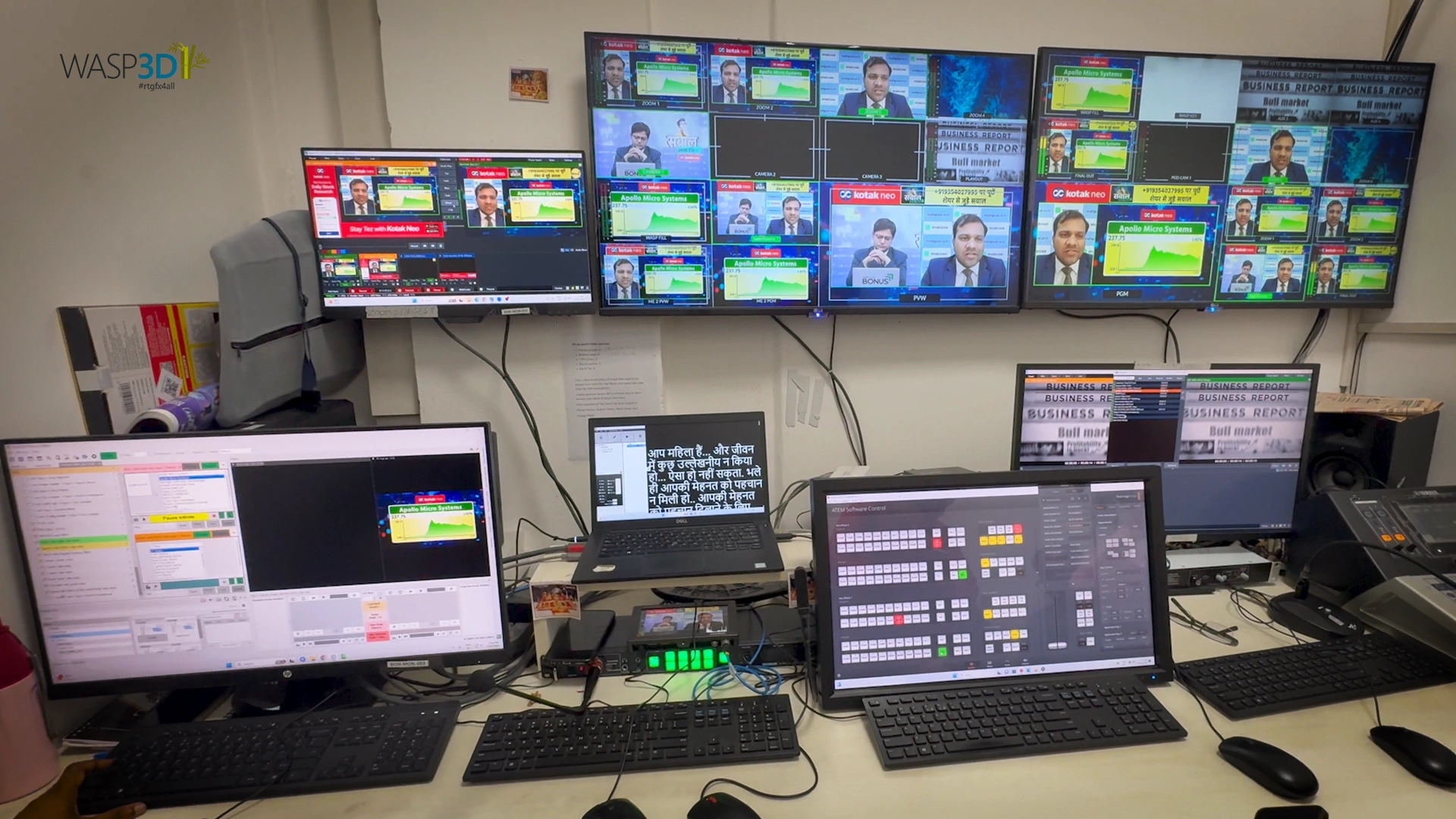
What Features Actually Matter in Live News Graphics?
When choosing a Live News Graphics system, features should be evaluated based on real-world usage not just specifications.
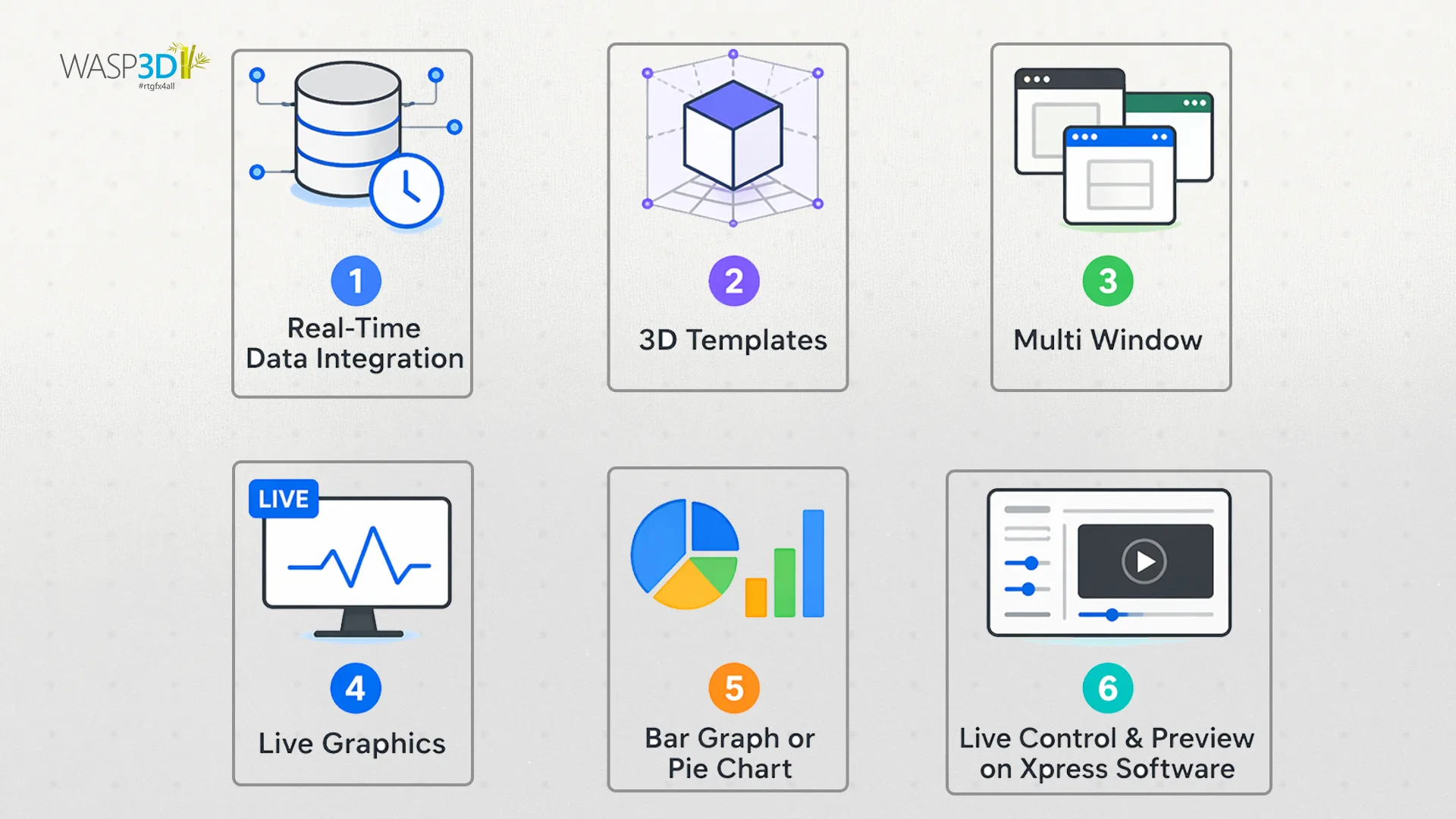
Real-Time Data Integration
In a newsroom, data changes constantly. A good system should automatically update graphics as new data comes in without manual intervention.
Template-Based Workflows
Instead of designing graphics from scratch every time, templates allow teams to quickly update content while maintaining consistency.
Multi-Screen Output
Today’s content is not limited to TV. Graphics must work across:
- Broadcast screens
- Mobile devices
- Digital platforms
Automation and Playlist Control
Live production often follows a sequence. A good system should allow automated playback of graphics like:
Breaking News → Headlines → Ticker → Next Segment
This reduces manual effort and minimizes errors.
Cloud and Remote Access
Modern workflows demand flexibility. Teams should be able to control graphics remotely, especially in distributed production environments.
Rendering Performance
No matter how good the design is, it must run smoothly on air. Lag or delays are simply not acceptable in live broadcasting.
Challenges in Both Approaches
No system is perfect, and both CG and HTML5 graphics engines come with their own limitations.
Challenges with CG Systems
- High initial cost
- Requires trained operators
- Hardware-dependent setup
Challenges with HTML5 Graphics
- Dependent on browser performance
- Possible latency in live scenarios
- Limited support for complex 3D graphics
Additional Advantages of Graphics Engines Over HTML-Based Systems
While HTML5 graphics offer flexibility, graphics engines provide structural advantages that become more important as production complexity increases.
Native Rendering Environment
Graphics engines render visuals inside a dedicated pipeline instead of relying on browser behavior. This results in more predictable and consistent output during live broadcasts.
Structured Graphics Architecture
Instead of webpage elements like divs and CSS, graphics engines treat visuals as structured objects and layers. This allows better control over positioning, animation, and composition.
Better Performance for Complex Graphics
Engine-based systems are optimized for multi-layer animations, real-time transitions, and heavy visual workloads, making them more suitable for high-pressure live environments.
Advanced Texture Management
Graphics engines manage textures internally, allowing centralized control and real-time updates without reloads. This is especially useful for dynamic content like logos, feeds, and data visuals.
Material and Depth Handling
Unlike HTML’s 2D styling approach, graphics engines use material and shading systems that provide depth, perspective, and more refined on-air visuals.
Simplified Data Control
Instead of relying on scripts, graphics engines often use form-based or parameter-driven controls, allowing operators to update live data quickly without coding.
Stability in Continuous Broadcasts
Graphics engines are built for long-duration live production. They offer stable performance without the interruptions that may occur in browser-based environments.
Consistent and Repeatable Workflows
With template-based systems and automation, graphics engines ensure consistency across multiple shows while reducing manual effort.
Where Engine-Based Systems Like WASP3D Fit In
In real newsroom environments, the biggest challenge is not just creating graphics it is managing them efficiently during live broadcasts.
This includes:
- Handling last-minute changes
- Updating live data
- Maintaining visual consistency
An engine-based system like WASP3D addresses these challenges by focusing on workflow simplicity and operational control.
Faster Turnaround During Live Broadcasts
Graphics can be updated instantly and pushed on-air without delays. This is especially useful during breaking news situations.
Managing Data-Heavy Content
For scenarios like elections or financial updates:
- Data updates quickly
- Graphics adjust automatically
- Errors are reduced
Consistency Without Extra Effort
Using structured templates ensures that all graphics follow the same branding and design guidelines.
One System for Multiple Outputs
Instead of creating separate graphics for different platforms, the same visuals can be adapted for:
- TV broadcast
- Digital platforms
- Mobile screens
Reduced Technical Dependency
Modern workflows are designed so that producers and designers can manage graphics without relying heavily on technical teams.
Real-World Use Cases of Live News Graphics
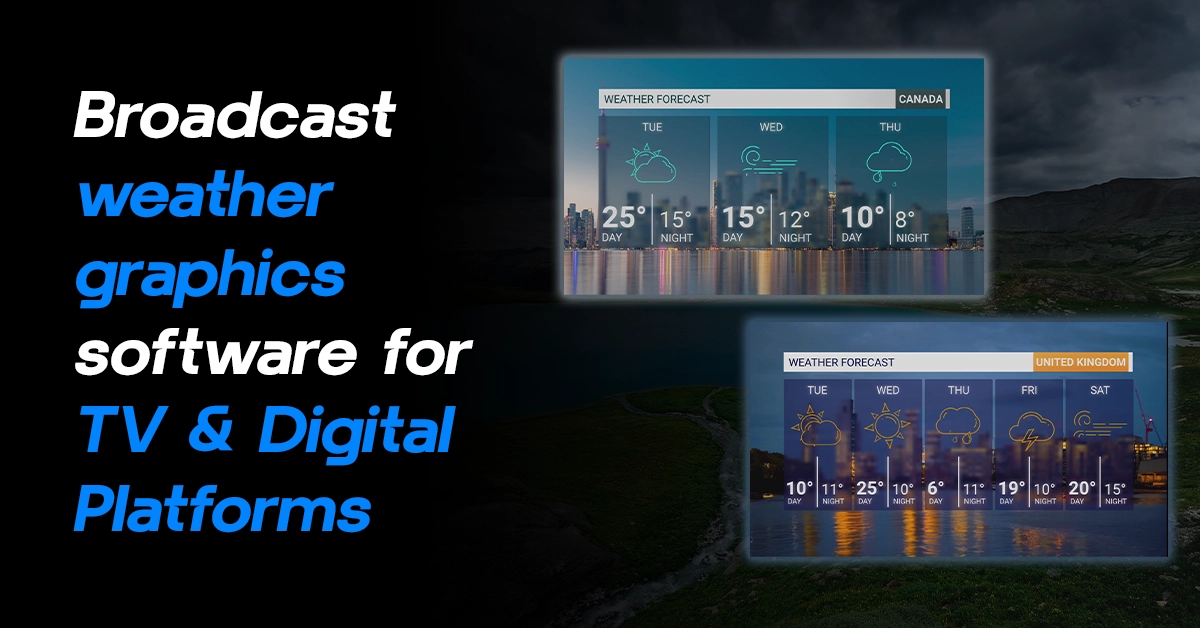
Live News Graphics are used in multiple scenarios, including:
- News Bulletins: For headlines, tickers, and segment transitions.
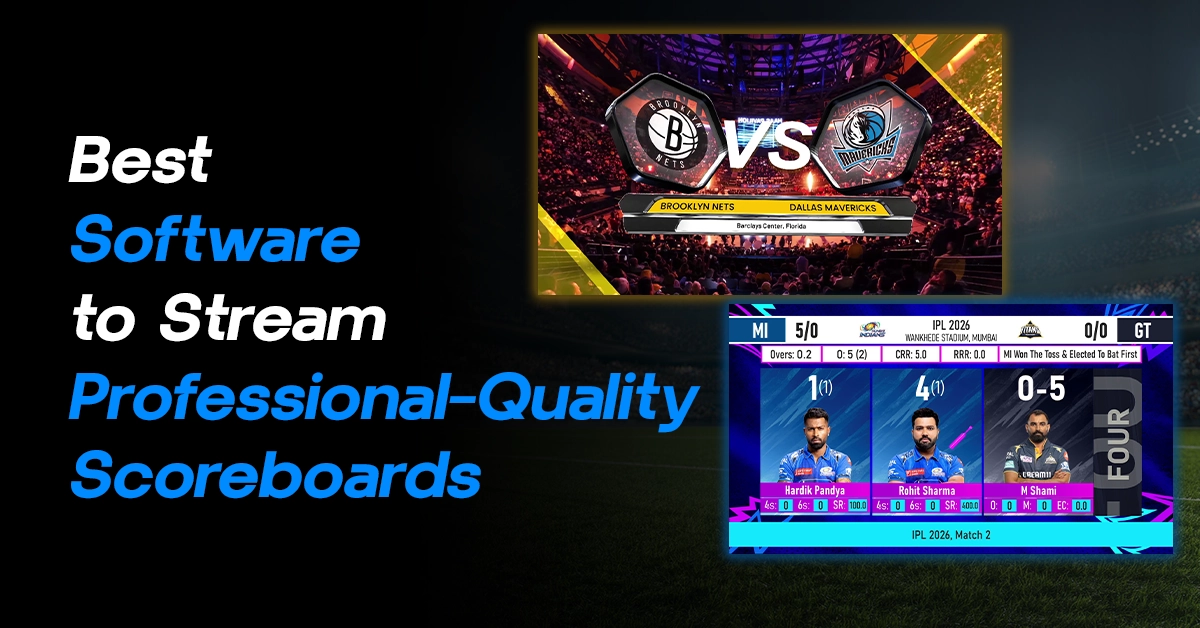
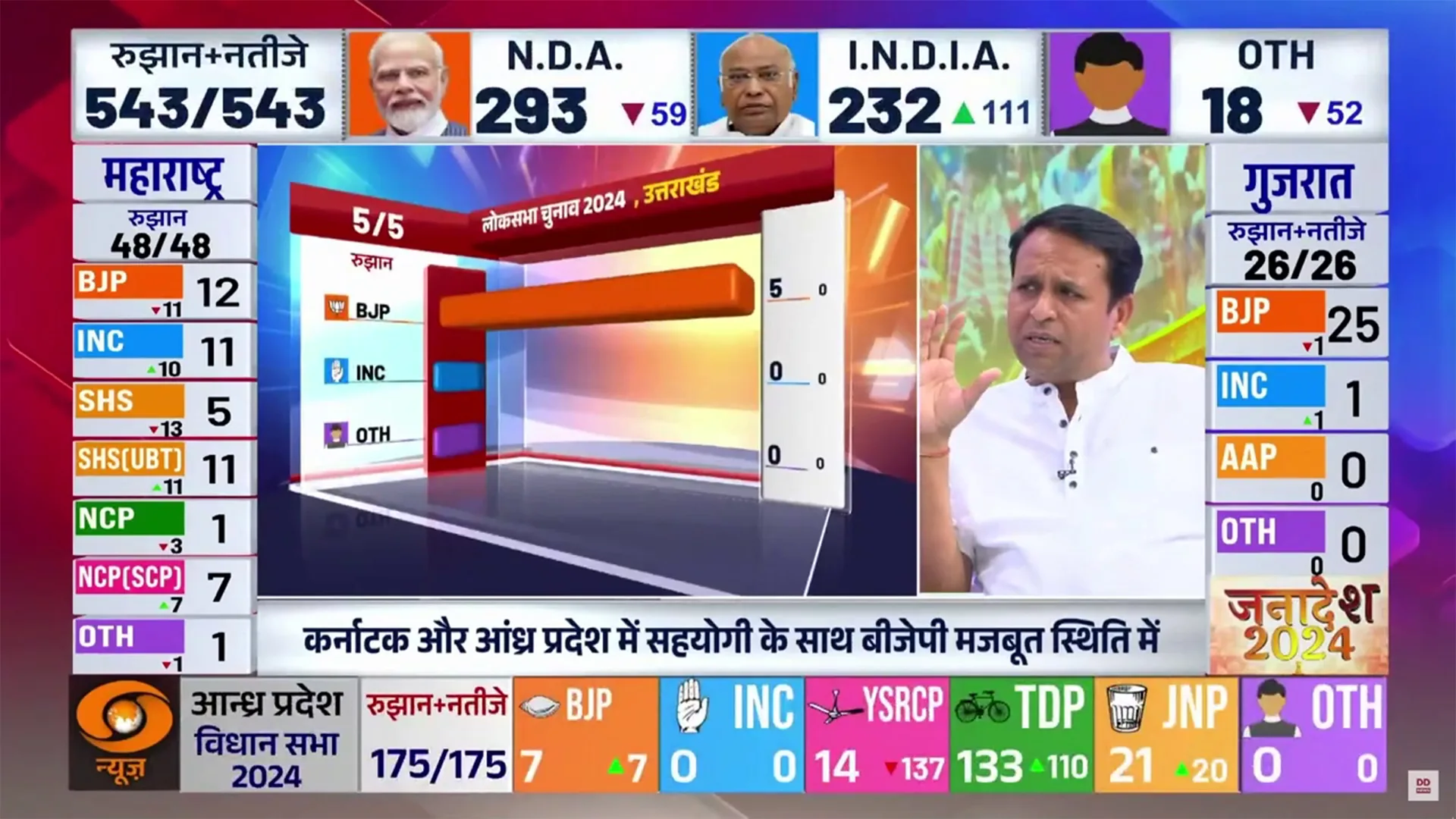
- Election Coverage: For real-time dashboards, maps, and results.
- Breaking News: For urgent, attention-grabbing visuals.
- Sports Coverage: For scoreboards and live updates.
- Financial News: For stock market and economic data visualization.
A Practical Perspective: HTML vs Graphics Engines
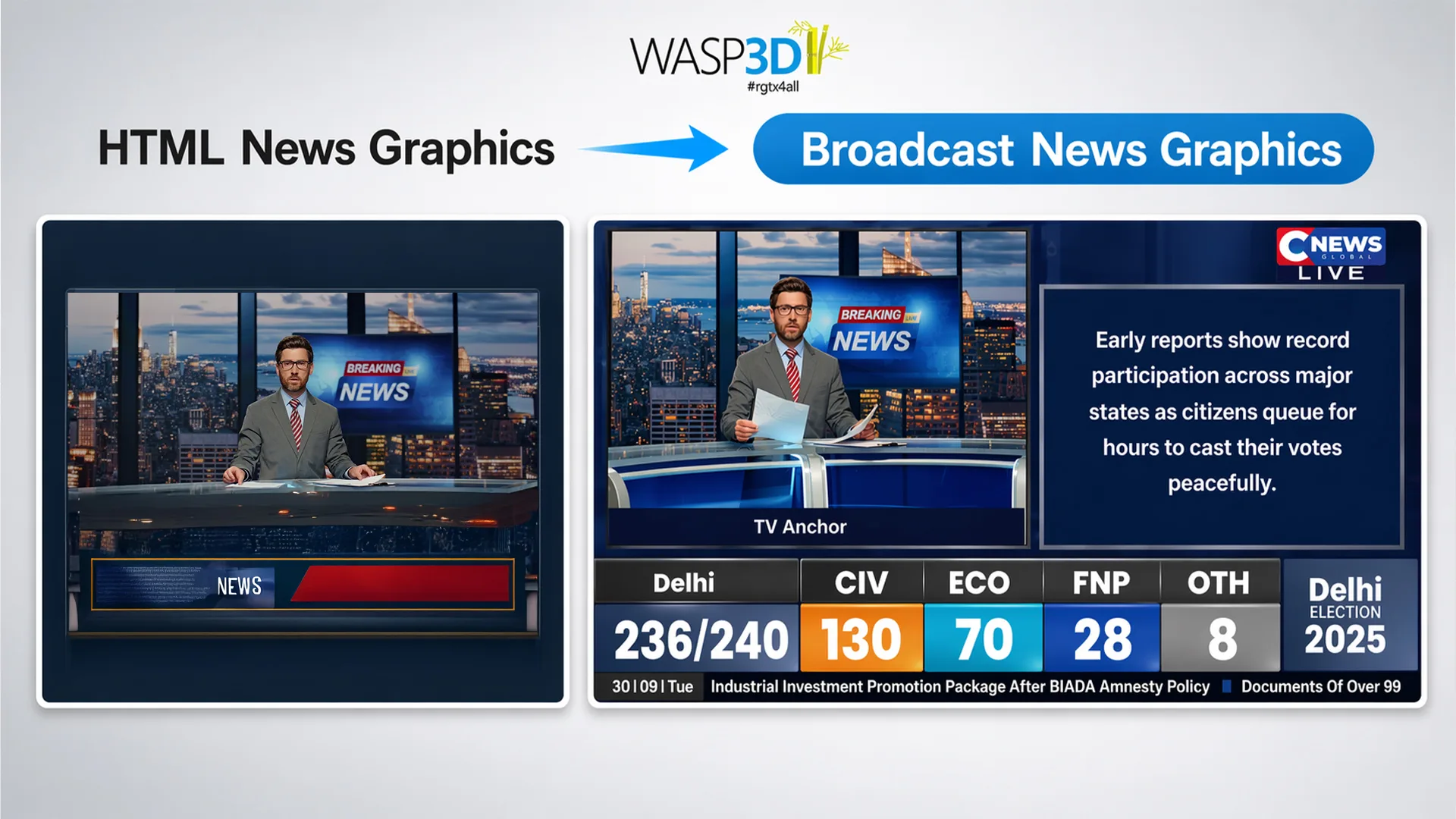
Many producers start with HTML graphics because they are easy to access and quick to deploy. For small-scale or web-only productions, this approach often works well.
However, as production grows, certain challenges may appear:
- Managing multiple data updates
- Maintaining consistency across shows
- Ensuring stability during long broadcasts
This is where graphics engines provide an advantage. Unlike HTML overlays that rely on browser behavior, engine-based systems operate in a controlled environment. Elements are treated as structured objects rather than styled webpage components. This leads to more predictable performance over time.
Even aspects like textures, animations, and layering behave differently. In browser-based systems, these depend on how the browser processes them. In graphics engines, they are managed within the rendering pipeline itself. This difference becomes more noticeable in complex, data-driven productions.
Conclusion: The Future of Live News Graphics
The future of Live News Graphics is not about choosing between CG and HTML5.
It is about choosing the right combination.
- CG systems offer precision and reliability
- HTML5 systems offer flexibility and speed
- Engine-based solutions bridge the gap between both
As news production continues to evolve, the demand for:
- Real-time updates
- Scalable workflows
- Consistent visual output
will only increase.
In the end, the goal is simple: Deliver information clearly, quickly, and without errors. The right Live News Graphics engine is not just a tool it becomes a critical part of how effectively a newsroom communicates with its audience.
FAQs
1. What are live news graphics, and why are they important?
Live news graphics are the visuals you see during a broadcast, like tickers, headlines, charts, and breaking news banners. They are important because they help viewers quickly understand information. Without live news graphics, news would feel slow and harder to follow, especially during fast-moving events.
2. Which is better for live news graphics: CG or HTML5?
3. Are HTML5-based live news graphics reliable for live broadcasting?
HTML5 live news graphics work well in many cases, especially for web and streaming. However, since they run in browsers, performance can vary depending on the system and workload. For critical live broadcasts, some teams still prefer graphics engines or CG systems for more consistent output.