The demand for esports overlay templates has increased significantly as tournaments and livestream productions continue to grow worldwide. Professional Stream Overlay Templates for eSports and Live Events using advanced stream overlay template systems. Globally, the esports industry is expanding at an aggressive pace, with annual growth rates consistently hovering between 18% to 23%. What was once a niche gaming culture has now evolved into a multi-billion-dollar ecosystem, projected to grow several times its current size over the next decade.
This rapid growth has increased the demand for high-quality stream overlay template solutions in esports broadcasting. This growth is not just financial—it’s deeply tied to audience behavior. By 2026, esports is expected to cross 600 million global viewers, putting it in direct competition with traditional sports in terms of engagement and reach.
But the real story isn’t just about growth—it’s about acceleration across every layer of the ecosystem including advancements in stream overlay template technology.
The number of tournaments is increasing rapidly, with global, regional, and even franchise-based leagues becoming more frequent and more sophisticated. Prize pools have reached unprecedented levels, alongside the adoption of modern stream overlay template workflows. Crossing tens of millions of dollars for single events, signaling the scale at which esports is now operating.
At the same time, new titles are continuously entering the competitive scene, expanding the ecosystem and creating more opportunities for organizers, broadcasters, and production teams.
With this expansion comes a sharp rise in competition—not just among players, but across the entire production landscape.
Every event today is not just competing for winners, but for viewership, engagement, and retention. As a result, the expectations from esports broadcasts have evolved dramatically. Static overlays and basic streams are no longer enough. Audiences now expect real-time data integration, dynamic stream template visuals, seamless transitions, and broadcast-quality storytelling—similar to, and sometimes exceeding, traditional sports production.
This shift has created a new kind of competitive pressure:
Not just to host events, but to produce experiences. This is where a well-designed stream overlay template becomes critical.
In this rapidly evolving environment, the gap between average and exceptional production is widening. And as more players enter the ecosystem—from indie tournament organizers to global event giants—the real challenge is no longer participation, but differentiation.
Now, let’s understand all of them, one by one.
Understanding Esports Overlay Templates
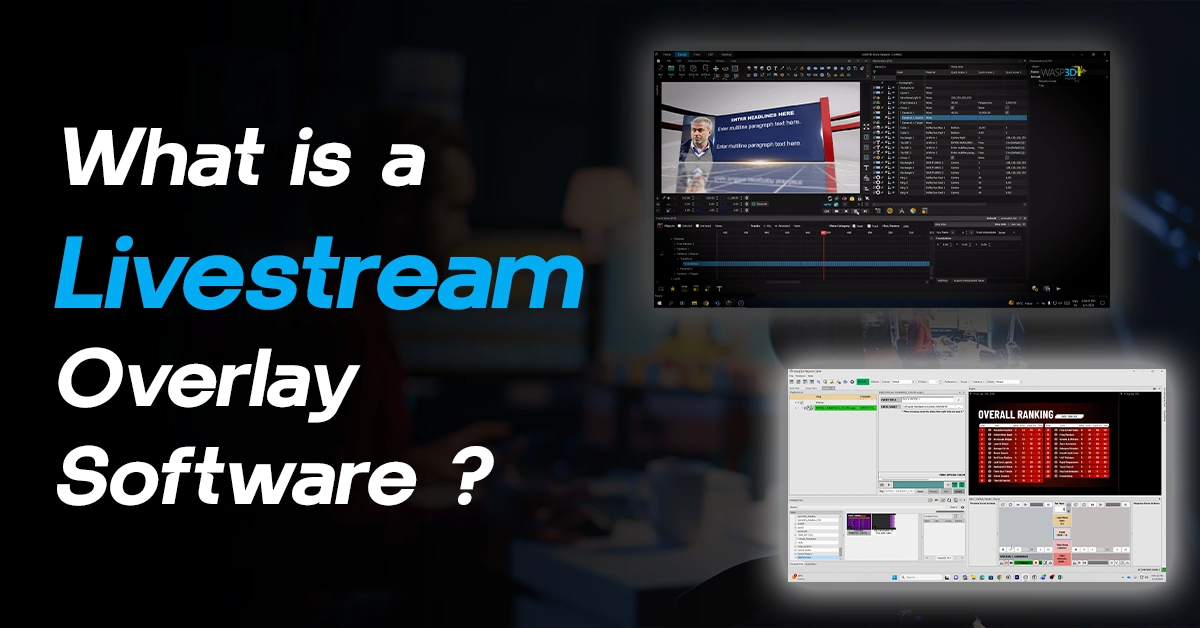
Modern esports overlay templates help production teams maintain visual consistency across broadcasts. A stream overlay template acts as the backbone of visual consistency in any broadcast. Stream overlay templates are pre-designed graphic layouts that sit on top of the video feed in a livestream. These templates define the design and structure of a graphic while allowing the content inside it to change easily.
Each stream overlay template ensures faster production and consistency. For example, a scoreboard template may include placeholders for team names, score values, match timers, and tournament branding. Once the design is created, producers only need to update the information rather than redesigning the graphic every time. This is a common use case of a stream overlay template in action.
Templates make it easier for production teams to maintain a consistent look across multiple broadcasts while also reducing the time required to prepare graphics before each stream. Using a stream overlay template reduces repetitive design effort significantly.
How Esports Overlay Templates Improve Tournament Broadcasts
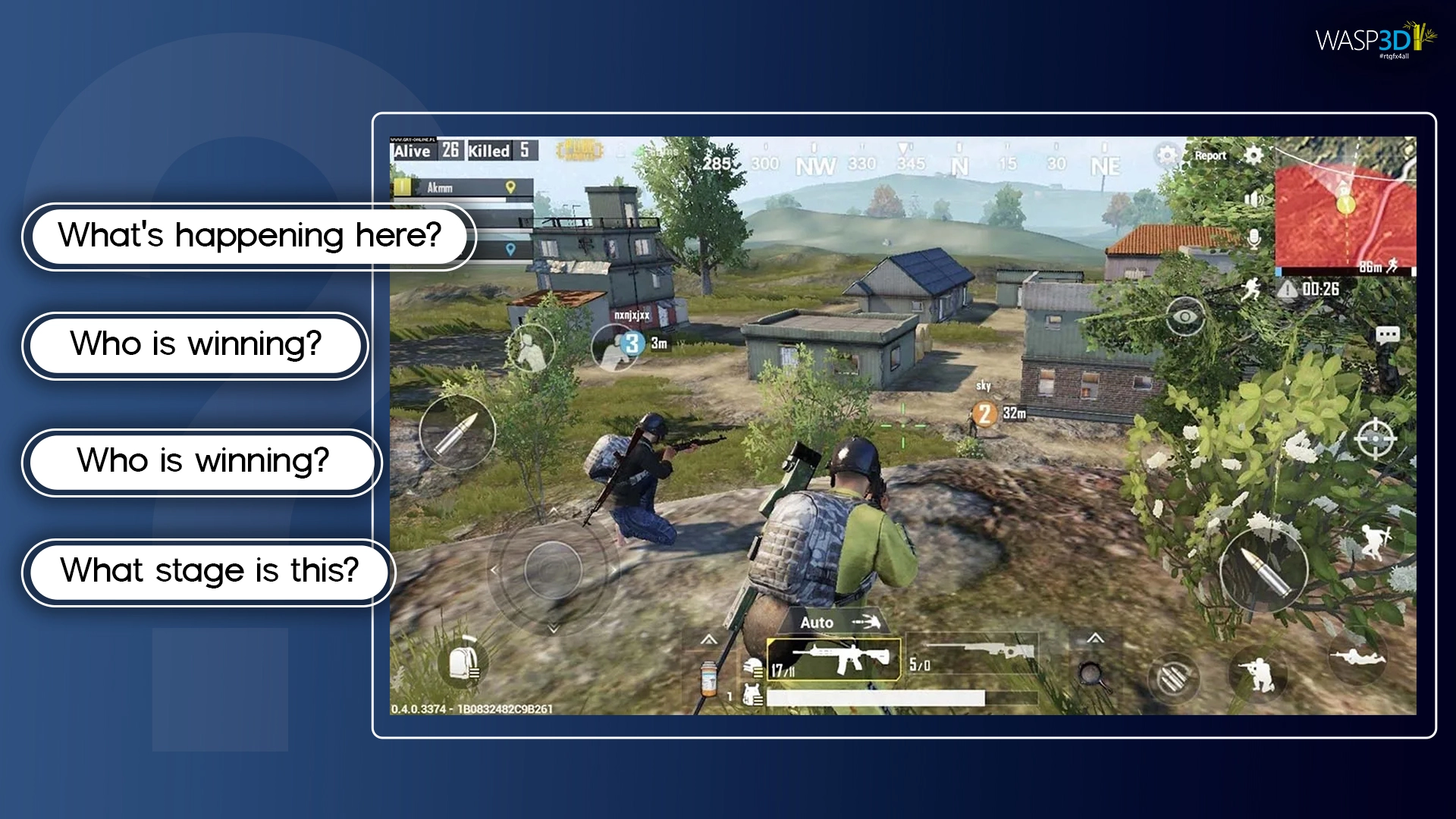
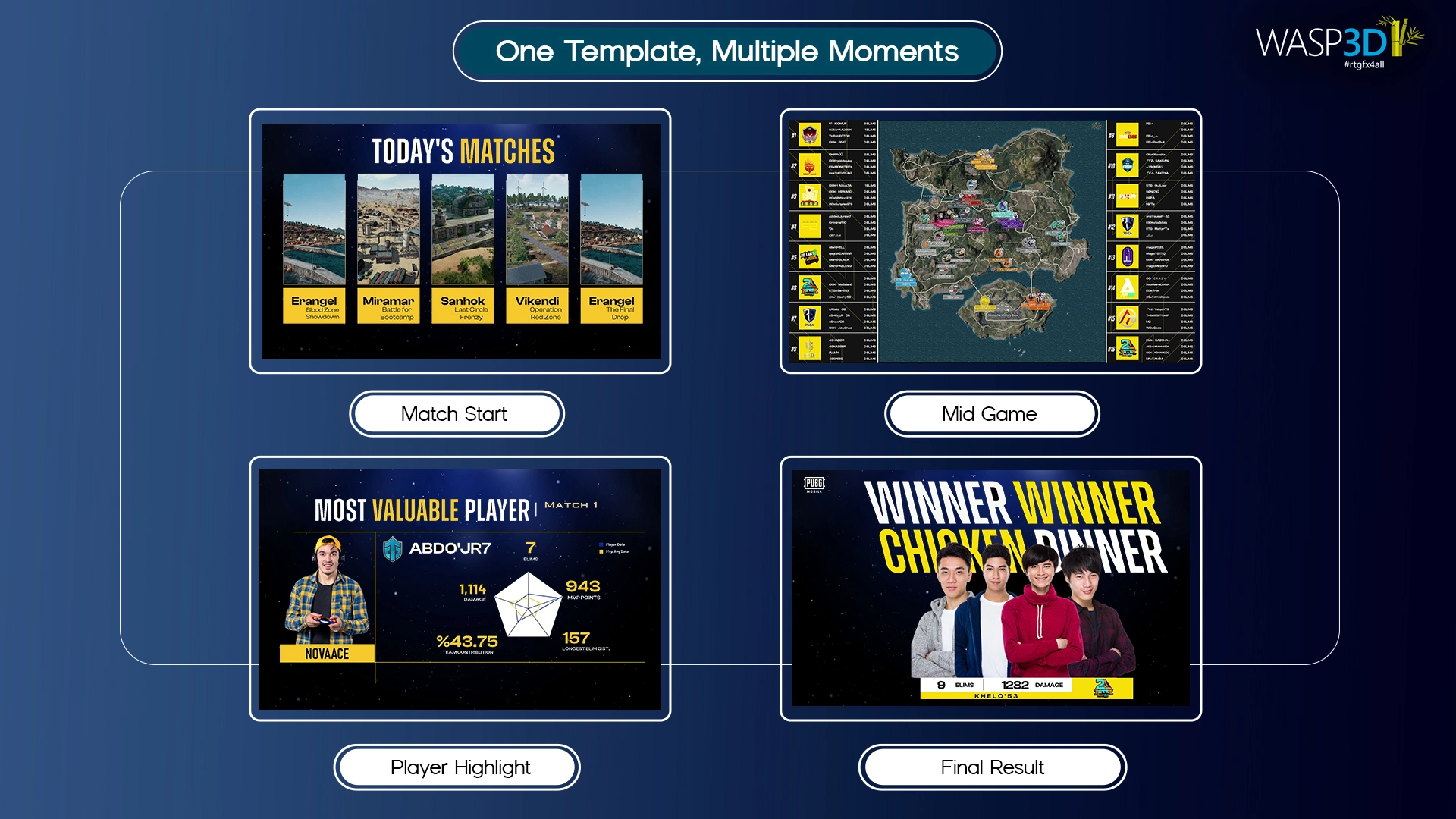
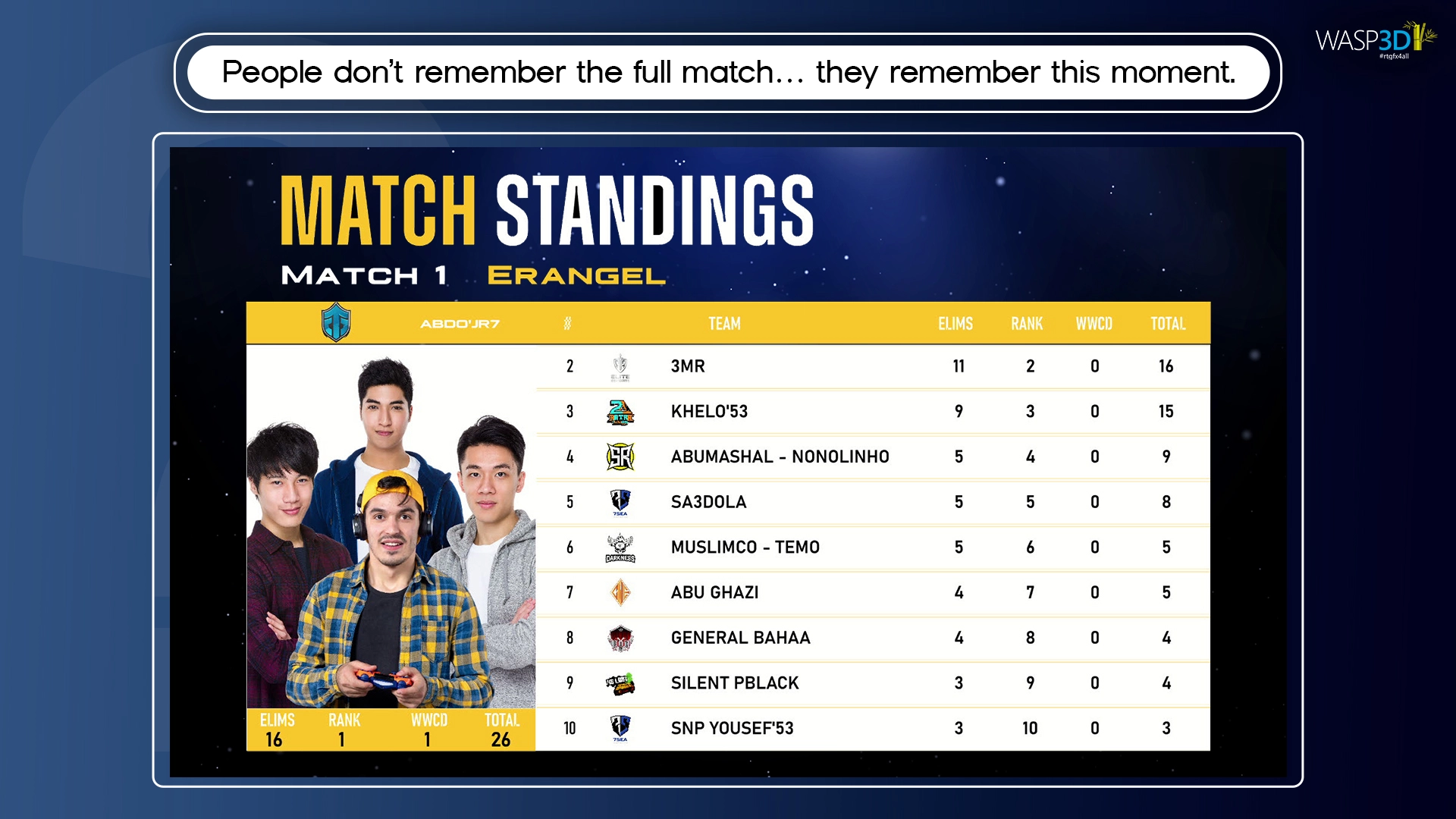
Professional tournaments depend on esports overlay templates to display scores, player information, and match statistics. Every professional broadcast depends on a structured stream overlay template system. eSports broadcasts rely heavily on graphics because competitive games produce large amounts of information that viewers need to understand quickly. Overlay templates help present this information clearly while the gameplay continues uninterrupted.
A stream overlay template helps organize complex game data visually. In most esports productions, templates are used for elements such as:
- Match scoreboards
- Player and team identification graphics
- Tournament branding elements
- Round timers and match status indicators
- Player & Team statistics panels
- Intermission screens between matches
- Kill Feed
- Match Results
- Team Rankings
- Post Match Summary Graphics & more
All these elements are typically built using a stream overlay template framework. These graphics help audiences follow the match more easily while also giving the broadcast a professional look like traditional sports coverage. This is why every esports production relies heavily on a stream overlay template.
The Role of Live Data in eSports Graphics
Modern esports overlay templates integrate with live data feeds to automatically update scores, player statistics, and match information. One of the defining characteristics of esports production is the use of live game data. Unlike static graphics, esports overlay often need to update automatically as the match progresses.
Scores, player statistics, match timers, and other gameplay events change continuously during a match. Live data feeds from the game or from esports data providers can deliver this information in real time, allowing graphics systems to update overlays without manual input. A dynamic stream overlay template enables real-time updates seamlessly.
This enables broadcasts to display the most recent match information while keeping the production workflow efficient. Modern stream overlay template systems integrate directly with data feeds.
How eSports Productions actually work?
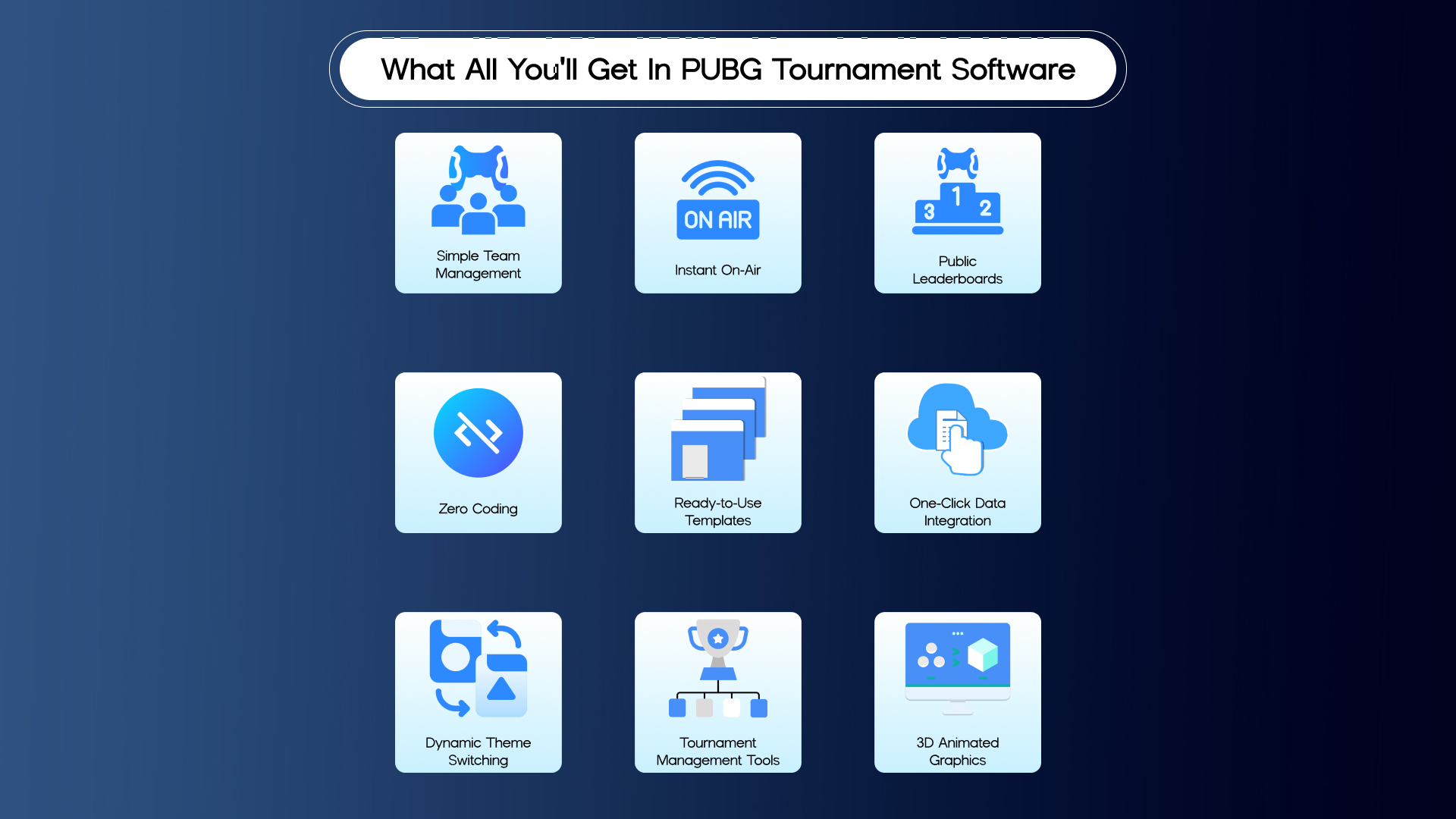
In a PUBG tournament, production is not limited to what appears on screen during the match. It involves managing the entire workflow—from setting up the tournament to presenting the final results. A centralized stream overlay template system simplifies this workflow. See how this works.
A system like Wasp3D PUBG Tournament Management Platform combines multiple functions in one place. Organizers can manage team registrations, create match schedules, and define tournament rules through a single interface. This removes the need to handle separate tools for operations and broadcast. Each graphic is powered by a customizable stream overlay template.
On the graphics side, predefined templates are used for elements like player stats, leaderboards, and match screens. These templates can be customized in terms of colors, fonts, and layout to match the event’s branding, without redesigning everything from scratch. This ensures the stream overlay template reflects accurate live data.
While it also comes with a powerful 3D Designer, you can build your own templated graphics as per your imagination.
During the match, game data is linked to these graphics so that information like standings or player performance reflects accurately on screen. After the match, the same system helps generate summaries, rankings, and overall tournament progression.
In this way, esports production tools are not just for visuals—they act as a combined system for tournament management, graphic control, and data handling, ensuring consistency across the entire event.
Overlay Templates for Live Events and Broadcast Shows
A stream overlay template is equally important in live event production. While esports rely on gameplay data, live events require graphics that communicate contextual information to viewers. Each use case depends on flexible esports overlay templates.
Broadcasts such as conferences, ceremonies, webinars, and online shows commonly use overlay templates to present information such as speaker names, session titles, and event announcements.
Some commonly used event graphics include:
- Lower thirds for speaker introductions
- Session titles and event segment identifiers
- Countdown timers before sessions
- Informational banners or announcements
- Break or intermission screens
These are standard outputs of a stream overlay template in events. These templates help viewers understand who is speaking, what session they are watching, and what is happening next in the event schedule.
Real-Time Graphic Updates Using Content Management Forms
Updating graphics quickly during live events can be challenging if every change requires editing and exporting a new design file. For events with multiple speakers or sessions, this process can become time-consuming. A stream overlay template eliminates manual redesign work.
Modern broadcast workflows as that of WASP3D address this challenge by using content management forms that allow producers to update the information inside overlay templates directly.
Instead of modifying the graphic design itself, producers can simply update fields such as:
- Speaker name
- Job title
- Session topic
- Announcement text
All updates are controlled through a stream overlay template interface. Once the information is updated in the form, the graphic updates automatically during the broadcast. This removes the need to reopen design software or export new graphic files each time information changes.
As a result, production teams can respond quickly to schedule adjustments, speaker changes, or last-minute announcements without disrupting the broadcast.
Reducing Production Effort with Template-Based Graphics
Reusable templates combined with dynamic content updates can greatly simplify the graphic workflow in live productions. Instead of repeatedly redesigning graphics, producers can focus on updating information and managing the broadcast. A well-built stream overlay template significantly improves efficiency.
A well-organized template system helps production teams:
- Maintain consistent broadcast graphics
- Update information quickly during live shows
- Reduce the need for repeated graphic exports
- Manage large numbers of overlays efficiently
This is the core advantage of using a esports overlay templates. These advantages are especially valuable in environments such as esports tournaments and multi-session live events where graphics change frequently. To get ready to use sports tournament graphics & live event graphics, check out store.wasp3d.com.
Conclusion
Esports overlay templates have become an essential part of modern tournament broadcasting and livestream production. Stream overlay templates have become an essential component of modern livestream production. They help structure broadcasts, present important information clearly, and maintain a consistent visual identity across shows. An overlay template plays a central role in this transformation.
In esports productions, templates often connect with live game data to display match scores, player statistics, and gameplay events as they happen. In live events, templates can be controlled through content management forms that allow graphics to update instantly without redesigning or re-exporting files. This highlights the importance of a smart stream overlay template.
By combining reusable templates with real-time data updates, production teams can deliver professional broadcasts while significantly reducing the time and effort required to manage graphics. Ultimately, a powerful overlay template helps deliver scalable and professional broadcasts. By using professional esports overlay templates, production teams can deliver engaging and scalable broadcasts.