Live Broadcast Production Explained: The Essential Components That Make It Work
Live broadcasts have become an essential part of modern media. From television newsrooms and sports coverage to corporate events and online streaming, audiences today expect real-time content delivered with professional quality. As a result, live broadcast production has evolved into a sophisticated process that combines advanced technology, skilled professionals, and carefully designed workflows.
While viewers see only the final output on their screens, a lot happens behind the scenes to ensure the broadcast runs smoothly. Cameras capture the action, switchers manage multiple video feeds, graphics add context, and audio systems ensure clarity. At the same time, reliable infrastructure and experienced teams work together to deliver the final stream without interruptions.
Understanding how live broadcast production works helps organizations, creators, and broadcasters make informed decisions about tools, workflows, and production strategies.
Understanding Live Broadcast Production
Live broadcast production refers to the process of capturing, processing, and delivering video and audio content to audiences in real time. Unlike pre-recorded content, live broadcasts require seamless coordination between multiple systems because there is little room for delay or error.
This form of production is widely used across industries, including:
- Television news broadcasts
- Sports events and tournaments
- Corporate conferences and webinars
- Concerts and live entertainment shows
- Online streaming and social media broadcasts
The growing demand for high-quality real-time content has also led to the emergence of specialized live broadcast production companies and live stream production services that help organizations manage complex broadcasts efficiently.
But what happens behind the scenes during a live broadcast? The answer lies in several key components that work together to create a professional production environment.
1. High-Quality Video Sources
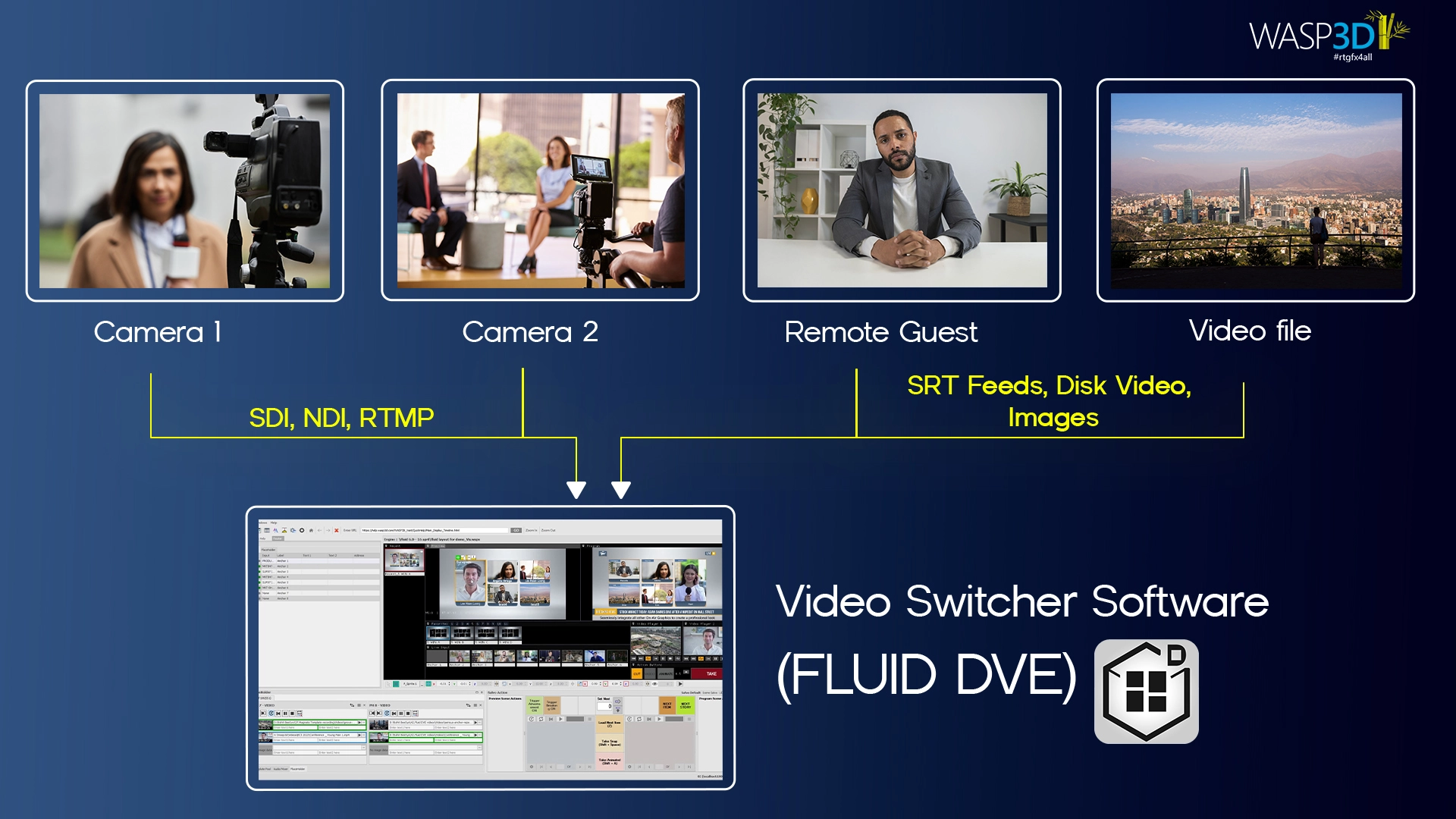
At the core of any live broadcast production setup are the video sources that capture the content. These sources provide the visual material that will eventually be transmitted to viewers.
Common video sources used in live stream production include:
- Professional broadcast cameras
- PTZ (Pan-Tilt-Zoom) cameras
- Media servers or playback systems
- Remote video feeds from external locations
- Screen captures or presentation inputs
Capturing high-quality visuals is crucial because the video feed forms the foundation of the entire broadcast. Poor lighting, unstable cameras, or low-resolution feeds can significantly affect the final output.
Using multiple video sources also provides flexibility in storytelling. For example, a sports broadcast may include wide stadium shots, close-ups of players, replay footage, and graphics overlays. Similarly, a newsroom broadcast may combine anchor shots, field reports, and visual explainers.
This multi-source approach allows producers to create dynamic and engaging broadcasts that keep viewers interested.
2. Video Switching & Production Control
Once multiple video sources are available, producers need a way to control which feed appears on screen at any given moment. This is where video switching plays a critical role in live broadcast production.
A video switcher allows operators to:
- Select between multiple video inputs
- Transition smoothly between scenes
- Display previews before switching live
- Combine sources for picture-in-picture layouts
During a live event, producers constantly decide which camera angle or video source should be shown to viewers. These decisions happen in real time, making video switching one of the most critical aspects of live stream production. At WASP3D we also provide you a complete guide for video switcher software with which you can easily get your hands on some amazing tools for live streaming.
3. Broadcast Graphics & Visual Storytelling
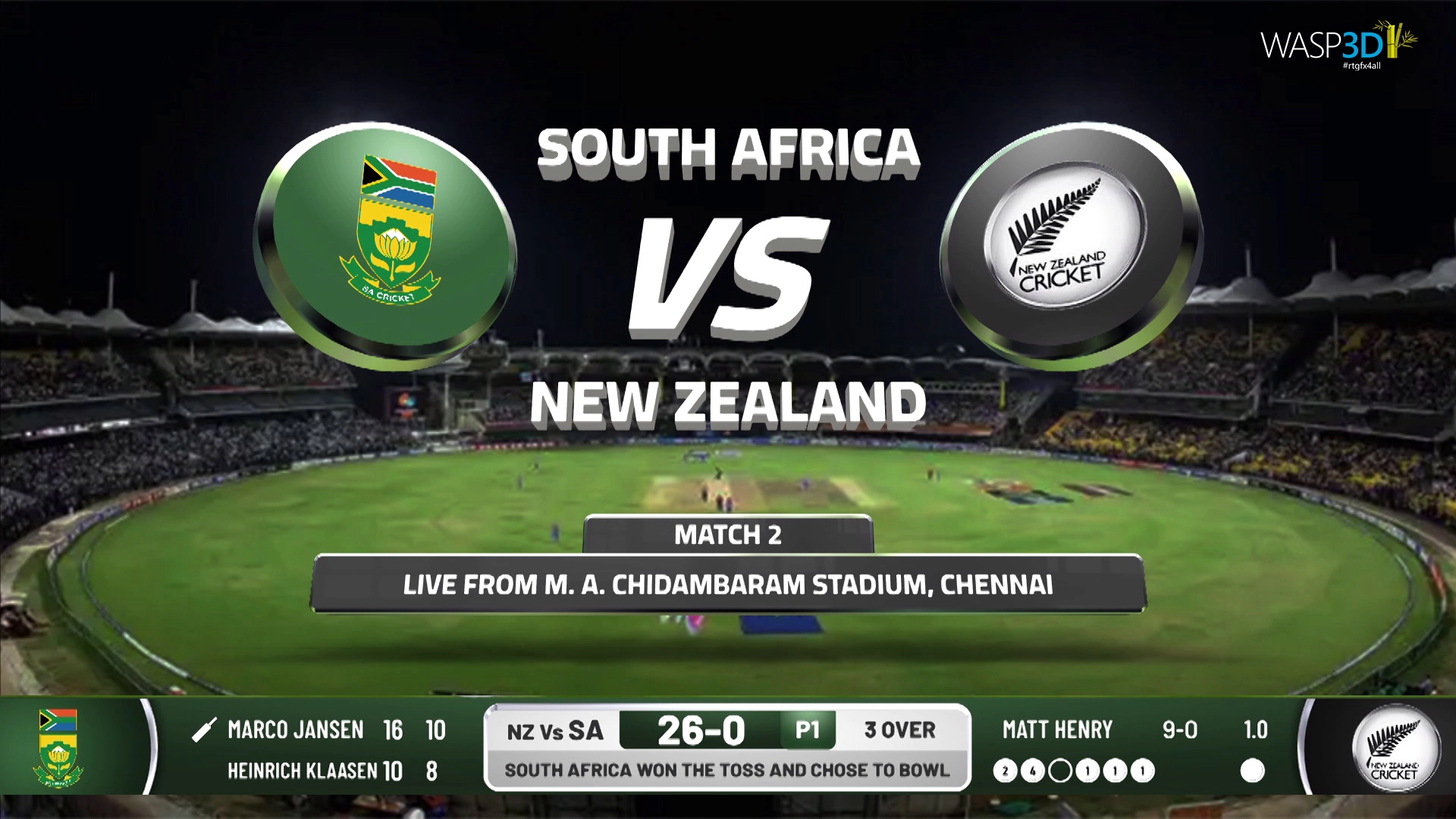
Modern broadcasts rely heavily on graphics to provide context, information, and visual appeal. From breaking news tickers to sports scoreboards, graphics play a key role in enhancing viewer understanding.
Common broadcast graphics include:
- Lower thirds (name and designation banners)
- News tickers and scrolling text
- Scoreboards and match statistics
- Data visualizations and charts
- Virtual backgrounds and studio sets
In fast-paced environments such as newsrooms and sports broadcasts, graphics often need to update in real time. For example, election coverage may display live voting data, while sports broadcasts show updated scores and player statistics.
Take Your Live Graphics Production to the Next Level with WASP3D
Advanced graphics tools help broadcasters create immersive visual experiences. The WASP3D ecosystem offers a range of solutions designed to enhance live broadcast production workflows:
- WASP3D Xpress – A free 3D graphics designer that enables creators to produce professional-quality graphics with ready-made templates available through the WASP3D store.
- WASP3D Pro – A powerful 3D graphics designer capable of integrating live data for real-time visual updates.
- WASP3D Virtual – Enables the creation of highly realistic 3D virtual sets, both tracked and trackless, giving studios a dynamic visual environment.
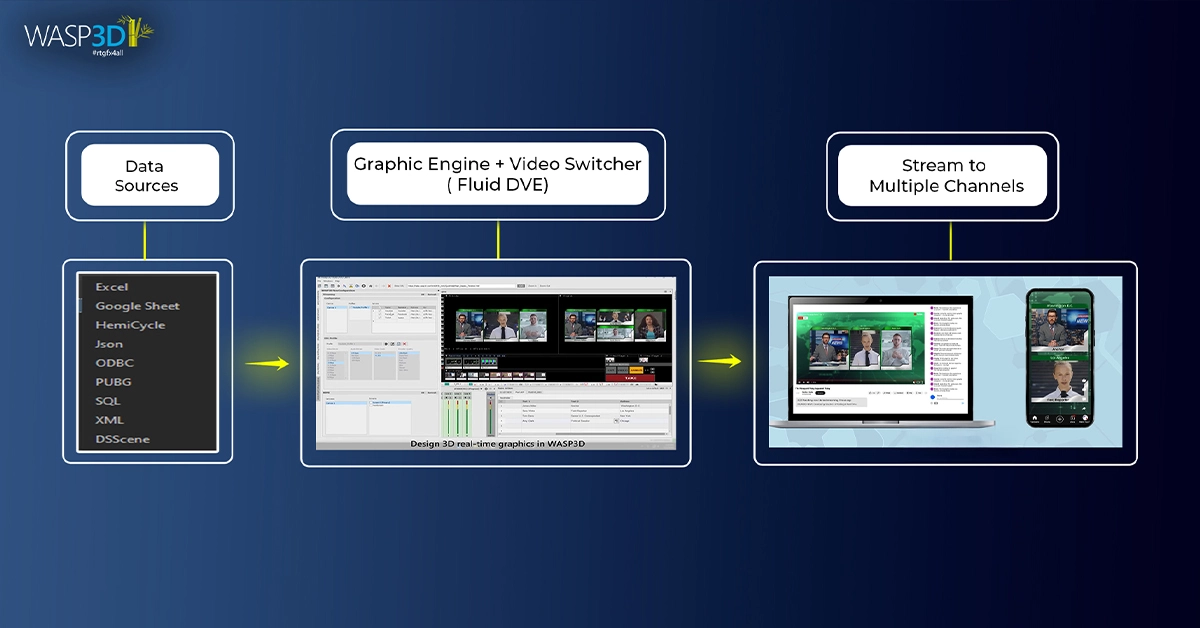
- WASP3D Fluid DVE – A complete solution combining 3D graphics, video switching, live streaming capabilities, and audio mixing within a single system.
By integrating advanced graphics tools into live stream production, broadcasters can significantly enhance storytelling and viewer engagement.
4. Audio Capture & Mixing
While visuals attract viewers, audio plays an equally important role in creating a professional broadcast. Clear and balanced sound ensures that audiences can understand the content without distractions.
Key elements of audio production include:
- Microphones for presenters, reporters, and performers
- Audio mixers to balance multiple sound sources
- Monitoring systems for real-time quality checks
- Noise control and audio processing tools
Poor audio quality can significantly affect viewer experience. Even if the visuals are perfect, distorted or unclear sound can make a broadcast difficult to follow.
This is why professional live broadcast production companies invest heavily in reliable audio systems and experienced sound engineers. But not anymore, as solutions like WASP3D comes within built audio mixers.
5. Automation & Workflow Efficiency
Modern live broadcast production environments often rely on automation to streamline complex workflows. It helps reduce manual effort and allows production teams to focus on creative decision-making rather than repetitive tasks.
Automation systems can be used to:
- Trigger graphics automatically during broadcasts
- Switch scenes based on pre-configured workflows
- Update live data for graphics or scoreboards
- Control multiple production systems simultaneously
This is particularly valuable in high-pressure environments such as newsrooms where production teams must deliver content quickly and consistently.
6. Reliable Infrastructure & Connectivity
Behind every successful broadcast lies a robust technical infrastructure that ensures the signal reaches viewers without interruptions.
Important elements include:
- Video encoding and signal processing
- Streaming servers and distribution platforms
- Network bandwidth and connectivity management
- Redundant systems for backup and failover
A reliable infrastructure allows broadcasters to deliver content across multiple platforms simultaneously, including:
- Television broadcasts
- OTT platforms
- Social media streams
- Corporate streaming platforms
This multi-platform distribution is becoming increasingly common as audiences consume content across different devices and channels.
7. The Human Element Behind the Technology
Despite the advanced technology used in live broadcast production, human expertise remains one of the most important factors in delivering a successful broadcast.
A typical production team may include:
- Producers and directors
- Camera operators
- Graphics designers
- Audio engineers
- Technical directors
- Streaming and IT specialists
Effective coordination between these professionals ensures that all elements of the broadcast work together seamlessly.
Organizations that do not have in-house production teams can also collaborate with experienced live broadcast production companies or hire specialized services for specific projects.
Additionally, production teams can also avail WASP3D one-time services, enabling them to access expert assistance for graphics design, virtual sets, or broadcast workflows when needed.
Conclusion
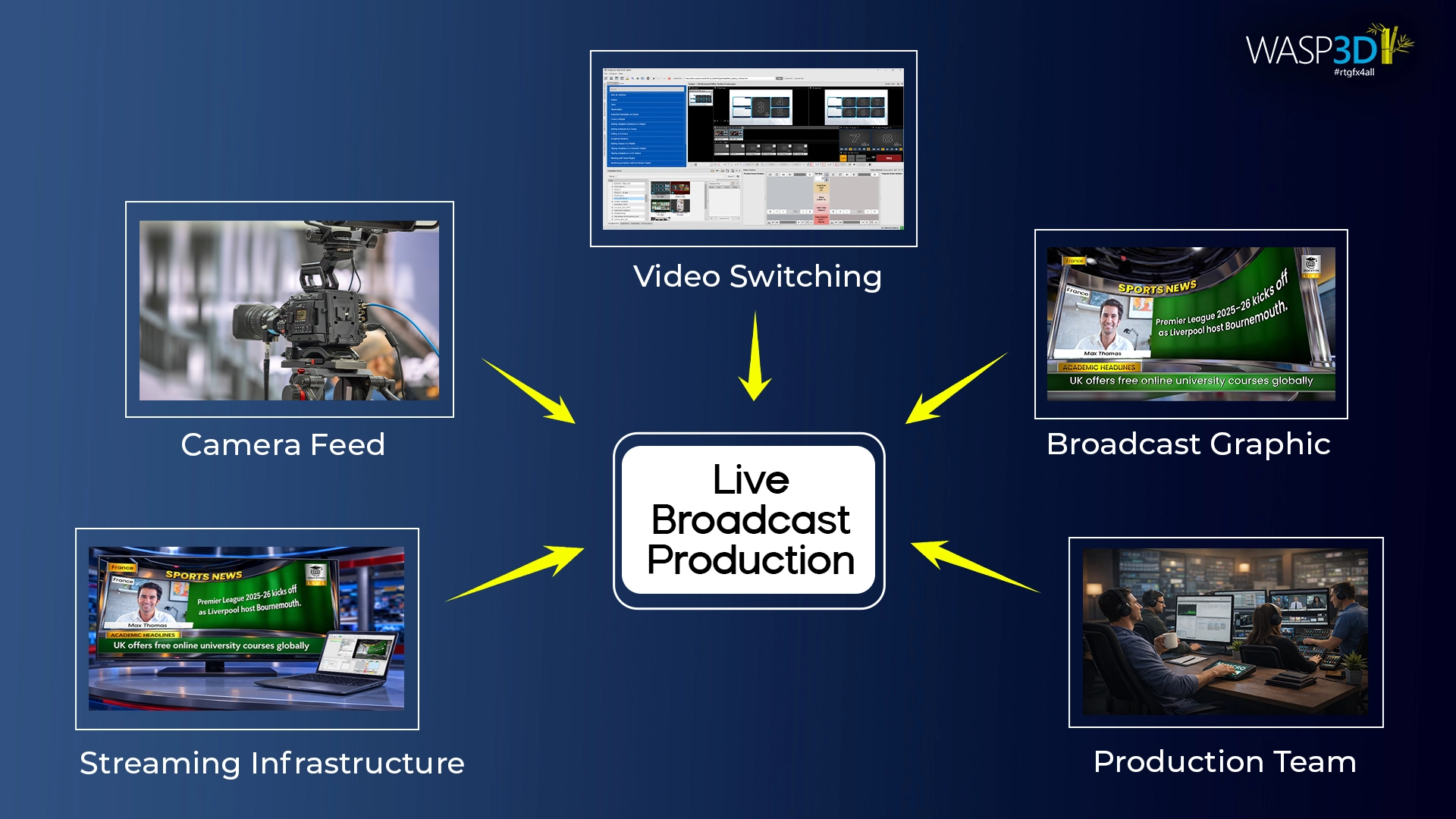
A successful broadcast is never the result of a single tool or technology. Instead, it is the outcome of a carefully designed ecosystem that combines video sources, switching systems, graphics, audio, automation, and reliable infrastructure.
When these components work together under the guidance of skilled professionals, the result is a seamless and engaging viewing experience for audiences.
As demand for real-time content continues to grow, organizations are increasingly investing in advanced live broadcast production workflows and collaborating with experienced live stream production companies to deliver high-quality broadcasts across multiple platforms.
Understanding these essential components helps broadcasters, creators, and businesses build more efficient production setups and deliver professional live content that meets modern audience expectations.
Testing