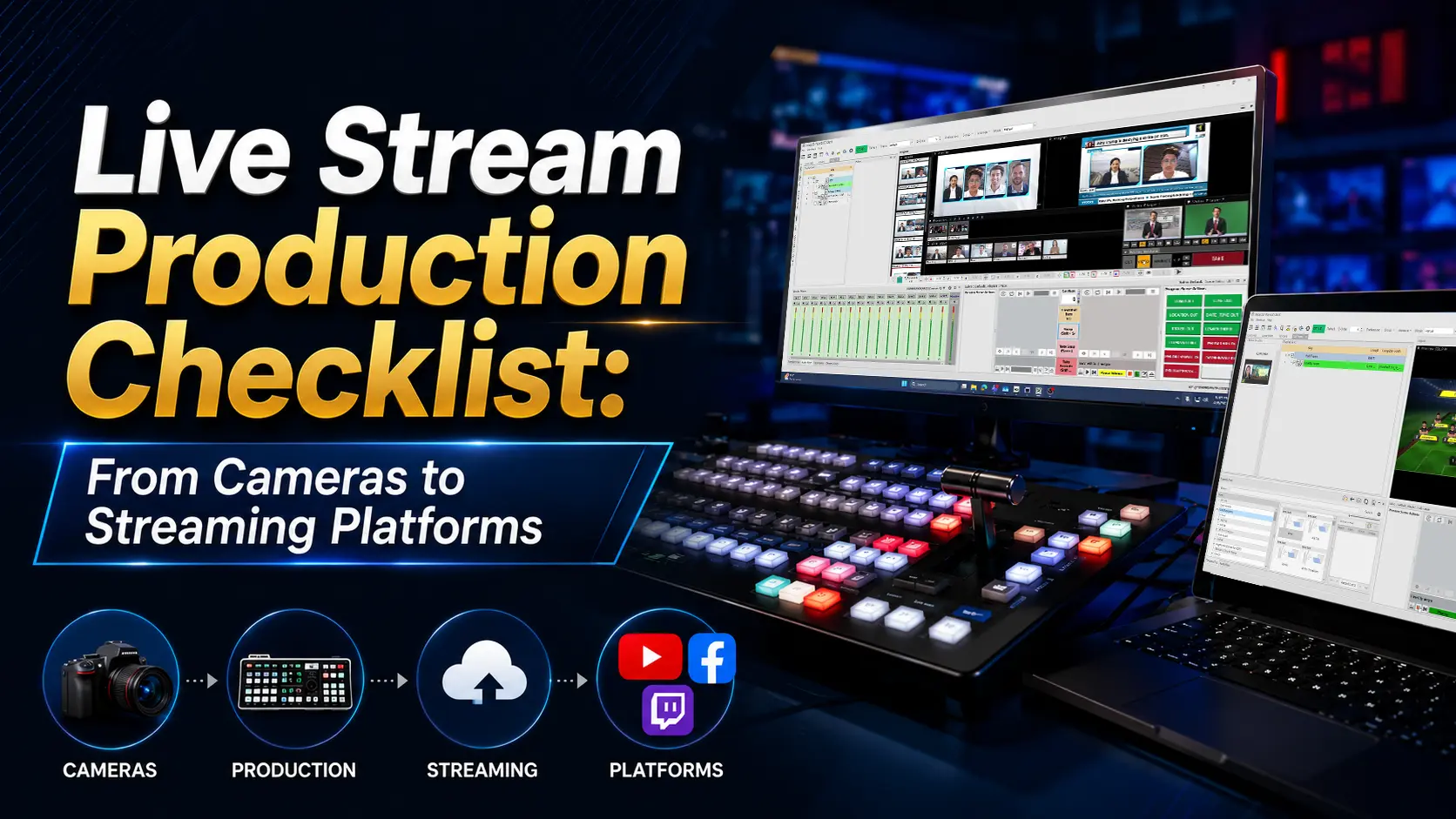
Live production has changed more in the last five years than it did in the previous two decades. Earlier, broadcasting was mostly limited to large TV studios with expensive hardware racks, dedicated control rooms, and highly specialized teams. Today, the production landscape looks completely different. A regional news channel can stream election coverage from a compact studio setup, a gaming creator can run a professional live show from a desktop workstation, and a corporate brand can host global hybrid events without building a traditional broadcast environment.
At the center of all these productions is one critical technology: the video switcher, often powered today by advanced video switcher software. Whether it is a breaking news bulletin, a cricket analysis show, a live webinar, a church stream, or a multi-camera esports tournament, someone has to decide which video source goes live at the right moment. That is exactly what a switcher does. It manages multiple video feeds and allows producers to transition smoothly between cameras, graphics, virtual sets, remote guests, presentations, and live content.
But the way broadcasters approach switching has started changing rapidly. The conversation is no longer just about buying a switcher. Now, broadcasters are comparing Hardware vs Software Video Switcher workflows because production demands have become far more dynamic than before.
Modern productions need graphics integration, remote production, virtual sets, multi-platform streaming, cloud workflows, real-time data visualization, and flexible layouts. That is why the debate between a traditional hardware video switcher and a modern software video switcher has become more relevant than ever. The answer is not black and white anymore. Both approaches have strengths, but the industry is clearly moving toward more flexible, software-driven production ecosystems.
Understanding Hardware Video Switchers in Live Production
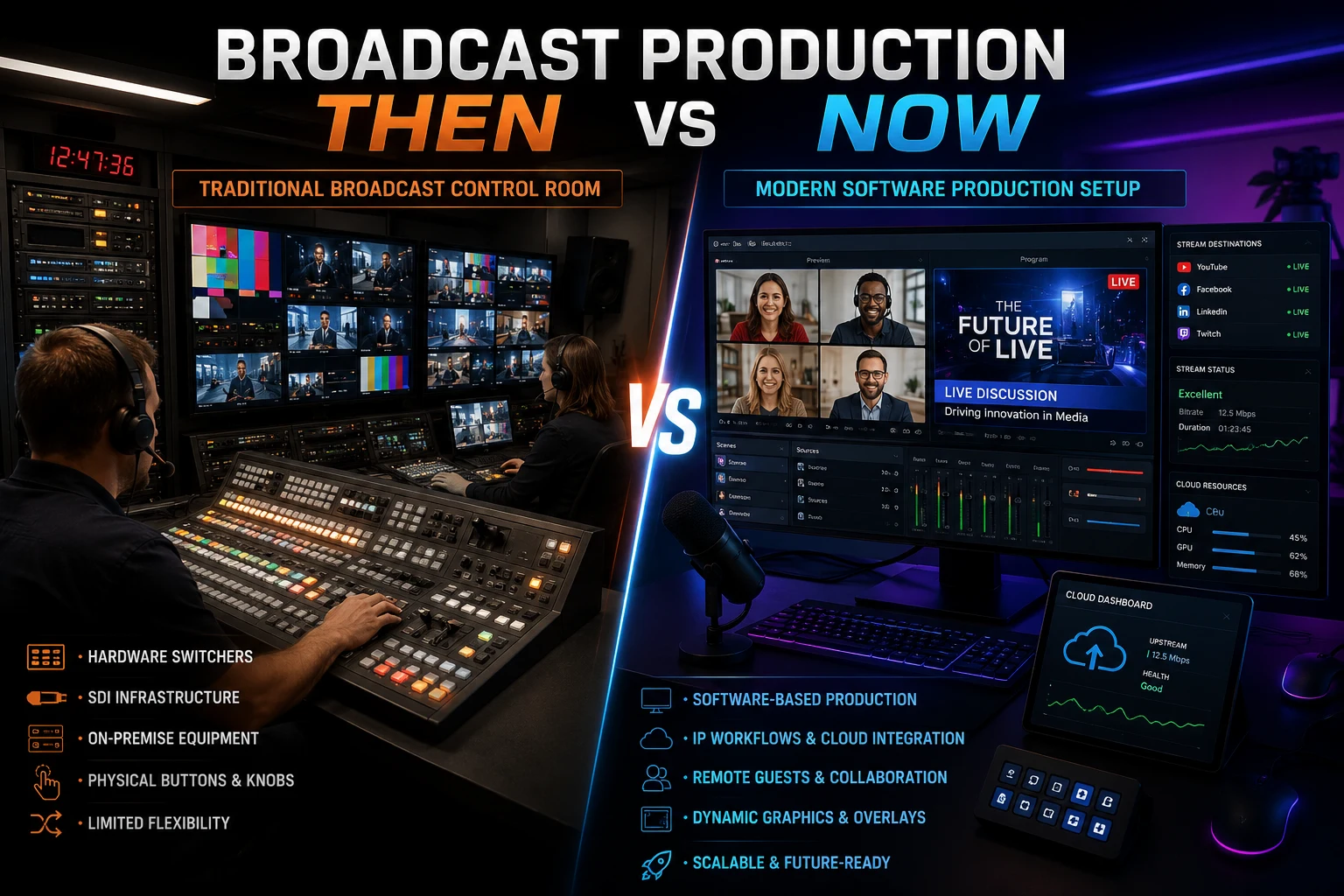
For decades, the hardware video switcher was the heart of professional broadcasting. If you walked into any television control room, you would immediately notice the physical switching console sitting in front of the production team. These systems were designed specifically for live video operations and built to handle high-pressure broadcast environments.
A hardware switcher is essentially a dedicated appliance made for real-time video switching. Unlike software systems that run on workstations or GPU-powered machines, hardware switchers use specialized internal processing architecture built specifically for live production reliability.
This is one reason broadcasters trusted them for so many years. Most hardware switchers come with SDI and HDMI inputs, physical switching buttons, multiview outputs, transition controls, audio mixing, chroma keying, and built-in processing features. The physical interface itself plays a major role during live production because operators can switch instantly without depending on software navigation or screen-based controls.
In high-pressure environments like sports broadcasting, election studios, and national television newsrooms, that level of operational confidence still matters. Broadcasters using traditional infrastructures often prefer hardware systems because they are stable and predictable. Large productions cannot afford frame drops or latency spikes during live transmission. That is why companies like Blackmagic Design, Ross Video, Grass Valley, and Sony have remained dominant in the broadcast hardware industry for years. But despite their reliability, traditional hardware systems are starting to feel restrictive in certain modern workflows.
How Software Video Switchers Are Changing Live Streaming
The rise of digital-first content completely changed production expectations. Broadcasters today are not just switching between cameras anymore. They are handling remote interviews, social media feeds, virtual sets, animated graphics, cloud workflows, and simultaneous streaming across multiple platforms. This is where the software video switcher started gaining serious momentum.
A software switcher performs video switching through CPU and GPU powered systems rather than dedicated switching hardware. In simple terms, the production environment becomes software-defined. Instead of needing multiple separate devices for graphics, streaming, compositing, and recording, modern video switching software can combine everything into a single workflow. That flexibility is a major reason why software-driven production has grown so fast.
A YouTube creator streaming podcasts, a regional news channel covering elections, or a corporate team hosting webinars does not always want to invest in huge hardware infrastructures. They need production systems that are scalable, adaptable, and easier to upgrade over time.
That is exactly what software-based workflows offer. Modern software switching systems can handle live streaming, graphics integration, virtual production, recording, remote guests, and multi-platform publishing together. Some systems even support cloud-based workflows and IP production environments, which have become increasingly important after the rise of hybrid and remote production.
Another major advantage is flexibility. Hardware systems usually depend on fixed processing pipelines, while software environments can evolve with updates, GPU upgrades, and workflow customization.
This is one reason many broadcasters now consider video switcher software not just an alternative, but the future direction of live production itself.
Hardware vs Software Video Switcher: Key Differences
Hardware vs Software Video Switcher: Side-by-Side Comparison Table
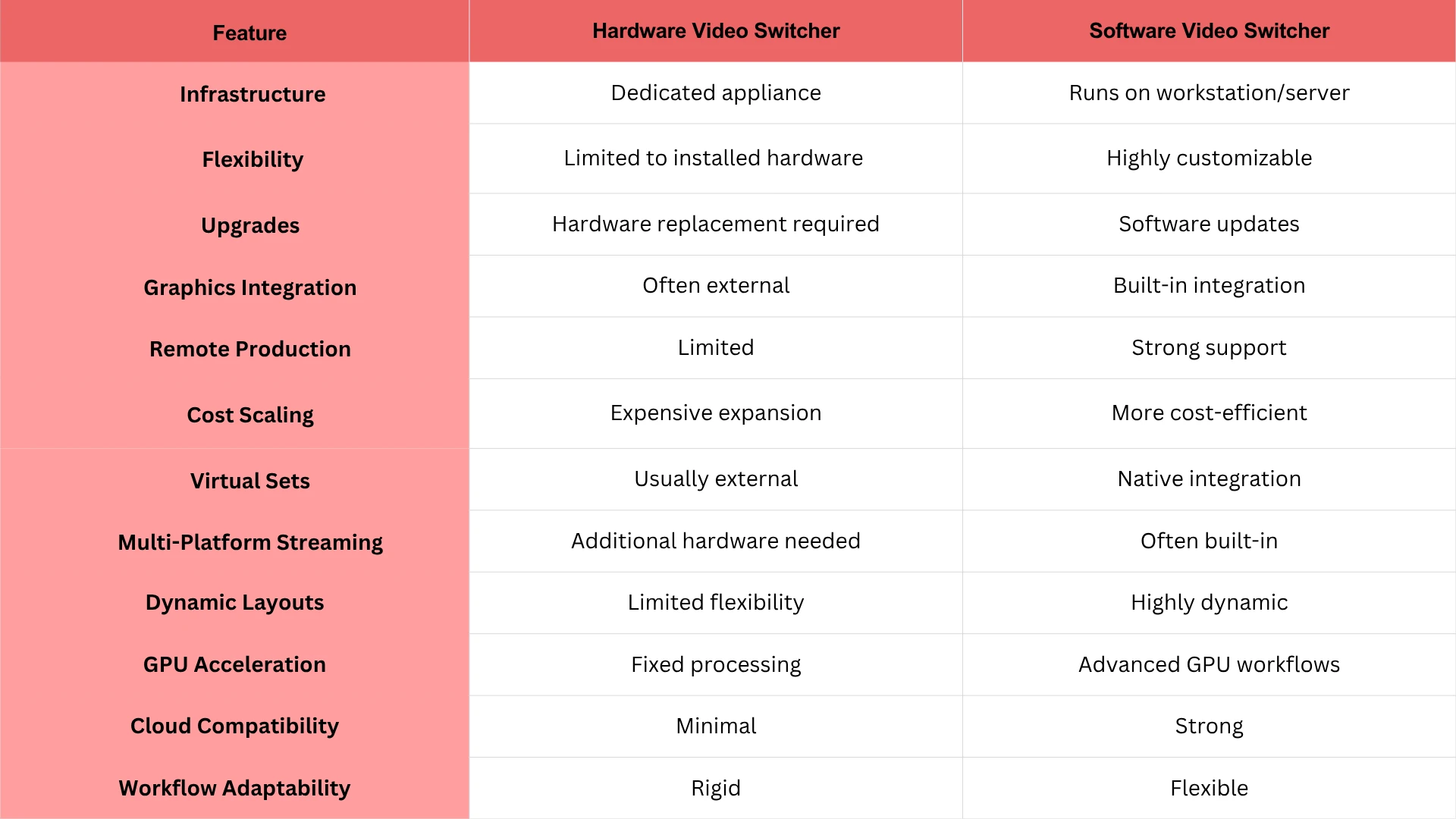
When people compare hardware vs. software video switcher systems, the biggest difference is not simply performance. It is adaptability. Hardware systems are incredibly reliable but often rigid. Software systems are more flexible and capable of evolving with modern production requirements.
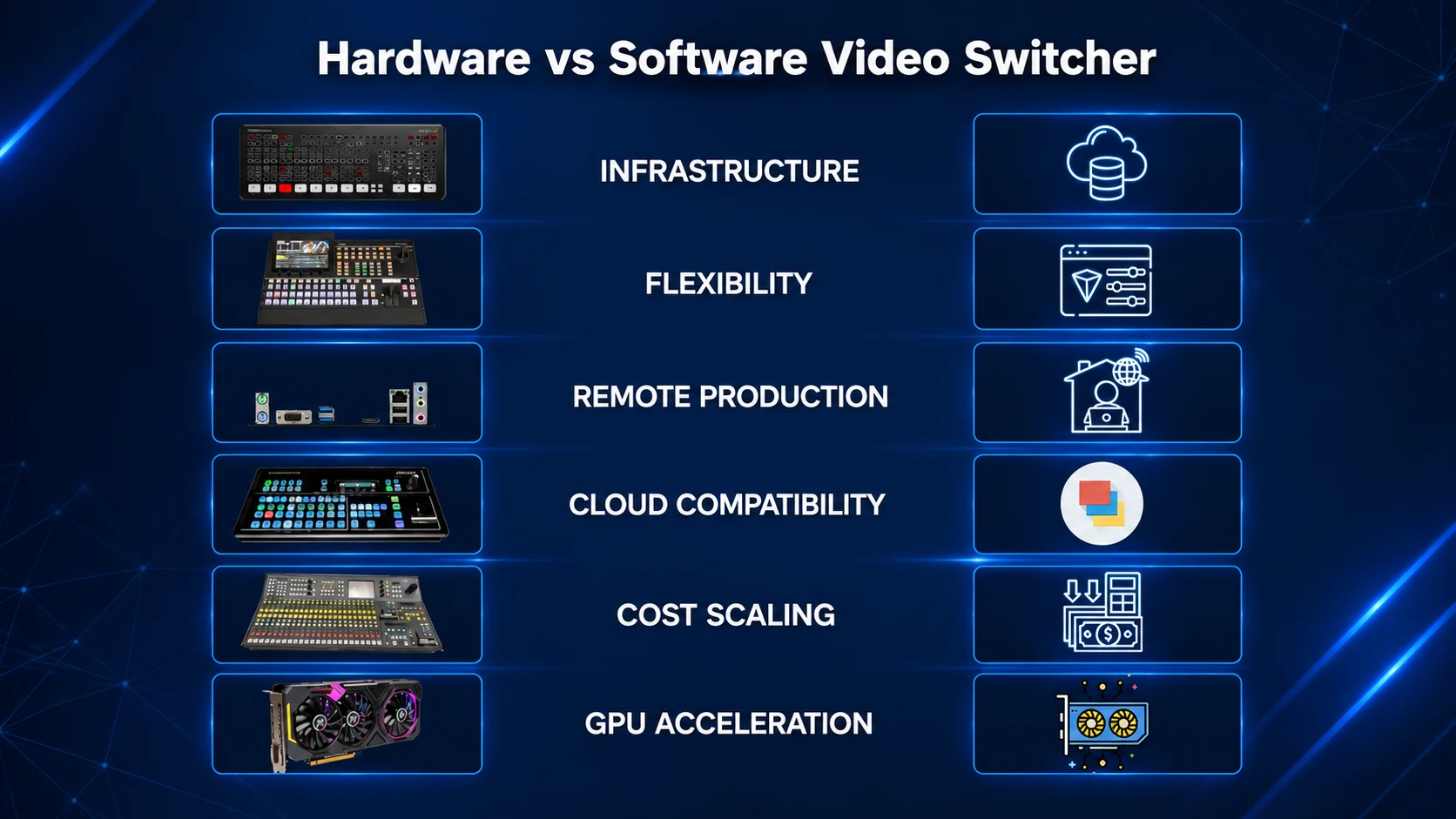
Why Broadcasters Are Moving Beyond Traditional Hardware Switchers
- Traditional switching systems still perform extremely well, but live production itself has changed.
- Earlier, most broadcasts followed predictable formats. Today’s productions are more visual, faster, and heavily data driven. Audiences expect dynamic graphics, multi-screen layouts, live social feeds, animated transitions, and immersive storytelling.
- The challenge is that traditional hardware workflows often require multiple external systems to achieve all of this. A broadcaster may need separate hardware for graphics rendering, video processing, replay systems, streaming encoders, routing, and compositing.
- As production grows, infrastructure costs increase very quickly.
- For smaller broadcasters and regional studios, this becomes difficult to sustain.
- Another challenge is operational flexibility. Newsrooms today need to react instantly to breaking stories.
- Election studios need real-time constituency updates.
- Sports productions need fast player statistics and analysis windows.
- Corporate productions need remote guest integration and hybrid conferencing.
- Modern workflows demand more flexibility than ever before.
- This is one of the key reasons why broadcasters are increasingly evaluating advanced video switcher software solutions and software-defined production ecosystems that can adapt faster without depending entirely on dedicated hardware layers.
Advantages of Software Video Switchers for Modern Production
- The biggest strength of a modern live streaming switcher is not just switching video feeds. It is workflow consolidation.
- A good software-based production system can combine switching, graphics, recording, streaming, compositing, and layout management into one environment.
- This simplifies production significantly.
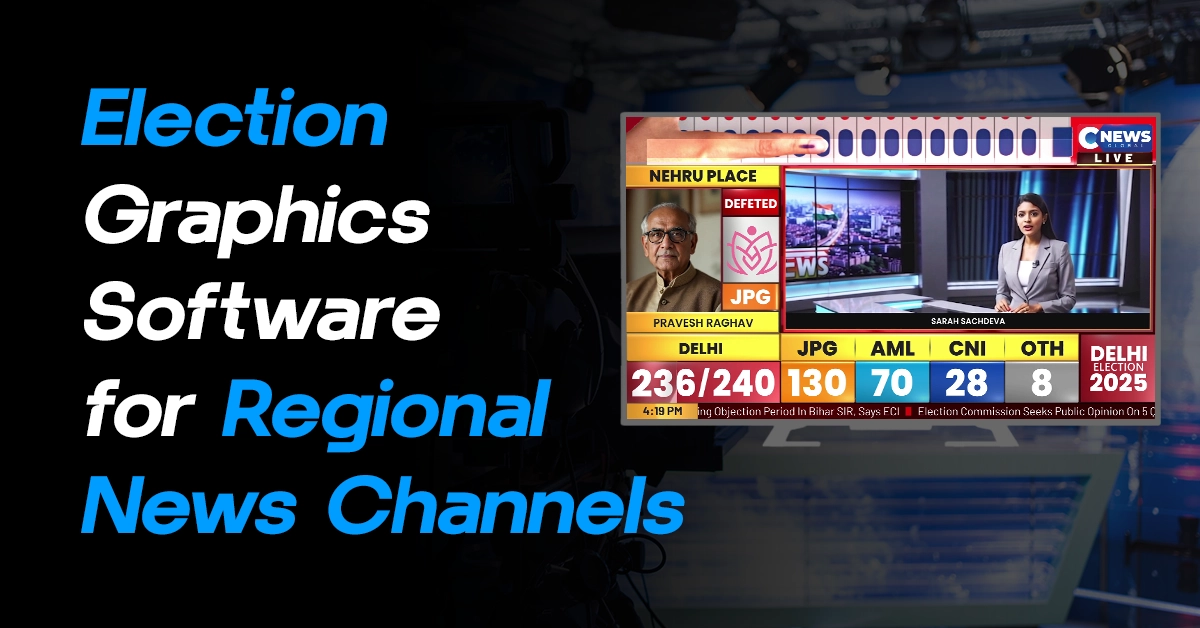
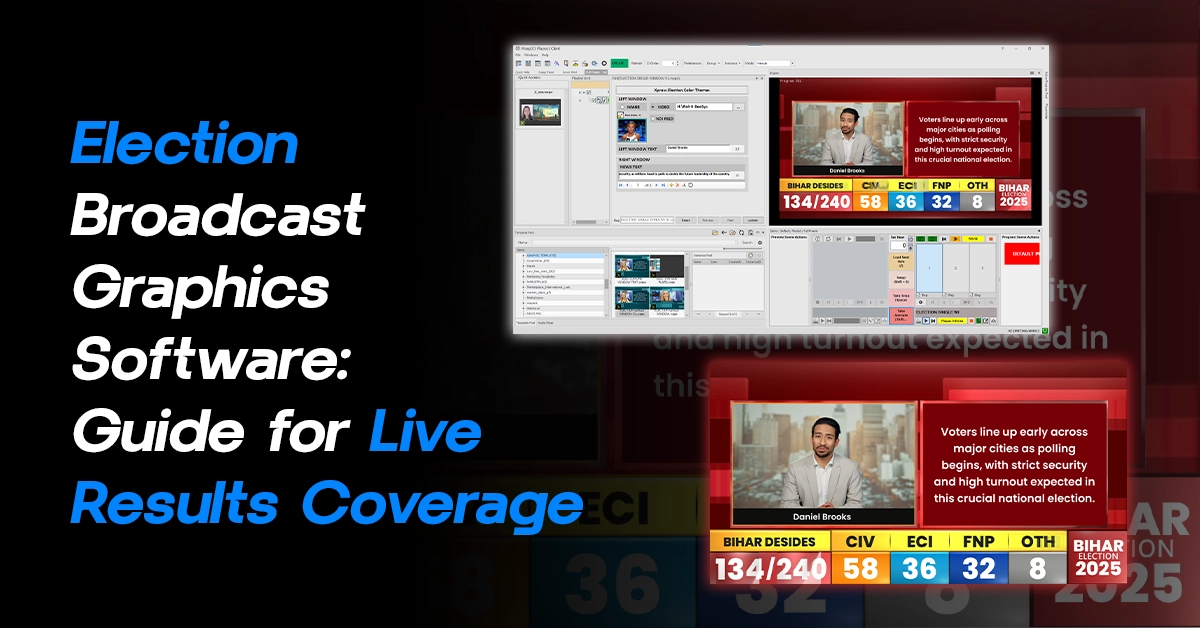
- Election coverage is a perfect example. Modern election broadcasts require dynamic constituency maps, live counting dashboards, real-time graphics updates, candidate data, social media feeds, and multi-window layouts running together continuously.
- Managing all this using only traditional switching hardware becomes extremely complex.
- A modern video switcher software handles these workflows much more naturally because the graphics engine, data integration, and switching environment can operate together in real time.
- The same applies to digital-first streaming environments.
- Today’s audiences watch content on YouTube, OTT platforms, mobile apps, and social media simultaneously.
- Software-based workflows make multi-platform streaming much easier without adding large amounts of external infrastructure.
- This is one reason software-driven production has become so popular among modern broadcasters.

Fluid DVE: A Smarter Approach to Software-Based Video Switching
One of the biggest problems with traditional switching systems is that they were never originally designed for highly visual, graphics-heavy storytelling. They were built primarily for switching feeds, not creating immersive visual experiences. That is where WASP3D’s Fluid DVE stands out.
Fluid DVE is not simply another video switcher software platform. It is designed as a GPU-powered visual production ecosystem that combines switching, compositing, graphics, and dynamic layout management into a unified workflow. This becomes especially valuable in productions where visual storytelling matters heavily.
For example, modern broadcasters frequently use multi-window video switcher layouts during election coverage, sports analysis, panel discussions, remote interviews, and breaking news coverage. Traditional hardware switchers often depend on fixed layout structures or external processors for these workflows.
Fluid DVE approaches this differently. It allows broadcasters to build highly dynamic layouts in real time with greater flexibility. Multiple video feeds, animated transitions, layered graphics, and live visual compositions can operate together within the same environment.
The GPU-powered architecture also allows smoother real-time rendering and advanced visual workflows that are difficult to achieve with fixed-function hardware systems alone.
Another major advantage of Fluid DVE is its integrated live streaming capability. Broadcasters can manage graphics, video switching, compositing, and live streaming from a single platform without relying on multiple external applications. This significantly simplifies production workflows while reducing operational complexity. Whether streaming to YouTube, OTT platforms, social media channels, or other digital destinations, operators can control live graphics, switch between multiple video sources, and stream the final output simultaneously from the same environment. By combining graphics, switching, and streaming into one unified workflow, Fluid DVE helps broadcasters deliver professional-quality productions faster and more efficiently.
Instead of treating switching and graphics as separate production layers, Fluid DVE merges them into a more connected and visually flexible workflow. That is a major reason why many modern broadcasters are now looking beyond traditional switching approaches.

Which Option Works Best for Different Productions?
There is no universal answer because every production environment operates differently. For YouTubers, streamers, webinars, and OTT productions, a software video switcher is often the smarter choice because it provides flexibility without requiring massive infrastructure investment.
- News channels are increasingly moving toward hybrid workflows where hardware switchers handle core studio operations while software systems manage graphics, virtual production, remote contribution, and dynamic layouts.
- Corporate productions also benefit heavily from software-driven systems because remote collaboration and hybrid events require greater flexibility than traditional hardware environments usually offer.
- Sports broadcasting still relies strongly on hardware switching because ultra-low latency remains extremely important during live sports coverage. However, even sports workflows are increasingly integrating software-based graphics and compositing layers alongside traditional hardware infrastructure.
- Election broadcasting may be the clearest example of where software-driven production is becoming essential. Real-time data visualization, constituency graphics, animated layouts, and rapid visual updates are far easier to manage through modern GPU-powered workflows.
Hybrid Production Is Becoming the Future
The industry is no longer choosing only hardware or only software. Instead, many broadcasters now combine both. Hybrid production environments are becoming common because they offer the reliability of traditional hardware systems alongside the flexibility of software-driven graphics and compositing workflows.
In many cases, platforms like Fluid DVE operate alongside traditional switchers rather than replacing them entirely. This allows broadcasters to maintain broadcast-grade stability while gaining the creative flexibility required for modern production storytelling.
This hybrid approach is quickly becoming the preferred direction for many professional production environments.
What to Look for in the Best Software Video Switcher
- Choosing the best software video switcher is not just about comparing feature lists.
- Broadcasters should focus on workflow flexibility, GPU acceleration, graphics integration, streaming capabilities, scalability, remote production support, and real-time compositing performance.
- A powerful live streaming switcher should simplify production workflows instead of making them more complicated.
- It should allow teams to adapt quickly, create visually dynamic productions, and integrate modern broadcast requirements without depending on excessive hardware infrastructure.
- That is exactly why GPU-powered systems are becoming more important in today’s broadcasting industry.
Hardware vs Software Video Switcher: Final Verdict
The debate around Hardware vs Software Video Switcher systems is not really about which technology is better overall. It is about which workflow makes more sense for modern production demands.
Traditional hardware switchers still play an important role in large-scale broadcast environments where ultra-low latency and operational reliability are critical. But production itself is changing rapidly.
Modern broadcasters need flexible workflows, real-time graphics integration, remote collaboration, virtual production, dynamic layouts, multi-platform streaming capabilities, and scalable video switcher software solutions. These are areas where software-driven systems continue gaining a major advantage.
That is why Fluid DVE is becoming increasingly relevant for broadcasters to build next-generation production environments. The future of live production is not just about switching feeds anymore.
It is about creating faster, smarter, more visually immersive workflows that can adapt instantly to the way modern audiences consume content.